More About This Card
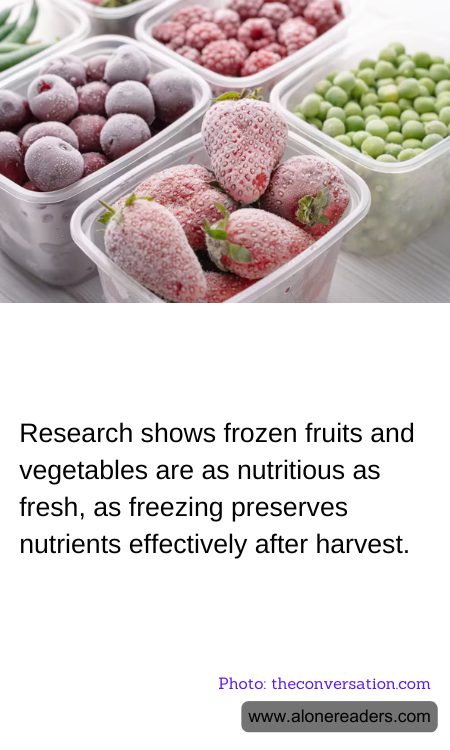
Frozen fruits and vegetables have become a staple in many households for their convenience and long shelf life. But there is a common misconception that they are less nutritious compared to their fresh counterparts. Contrary to this belief, extensive research has shown that frozen fruits and vegetables can be just as nutritious, if not more so in some cases.
When fruits and vegetables are harvested, they immediately begin to lose nutrients. Fresh produce often travels long distances from farm to market, which can take several days or even weeks. During this time, exposure to heat, light, and air can degrade sensitive vitamins such as C and B. In contrast, freezing fruits and vegetables soon after harvest helps lock in many of their vitamins and minerals. The process of freezing, known as flash freezing, involves quickly freezing the produce at extremely low temperatures. This rapid process prevents the formation of large ice crystals, which can damage cells and lead to nutrient loss when the produce is thawed.
Further backing this, studies have indicated that the levels of certain nutrients like vitamin A, carotenoids, vitamin E, minerals, and fiber are similar or sometimes higher in frozen fruits and vegetables compared to fresh ones. Additionally, frozen produce is available year-round, providing access to a variety of fruits and vegetables even when they are not in season, thereby helping individuals maintain a balanced diet.
It's crucial, however, to look at how frozen produce is prepared at home. Overcooking can lead to nutrient loss, particularly of water-soluble vitamins. Steaming or microwaving rather than boiling can mitigate this issue, helping preserve the most nutrients.
Overall, both fresh and frozen fruits and vegetables have their place in a healthy diet. The choice between them can be based on factors such as availability, price, intended use, and personal preference. The important takeaway is that freezing is an effective method to preserve the nutritional profile of produce, making frozen fruits and vegetables a convenient and healthy choice for many families.