More About This Card
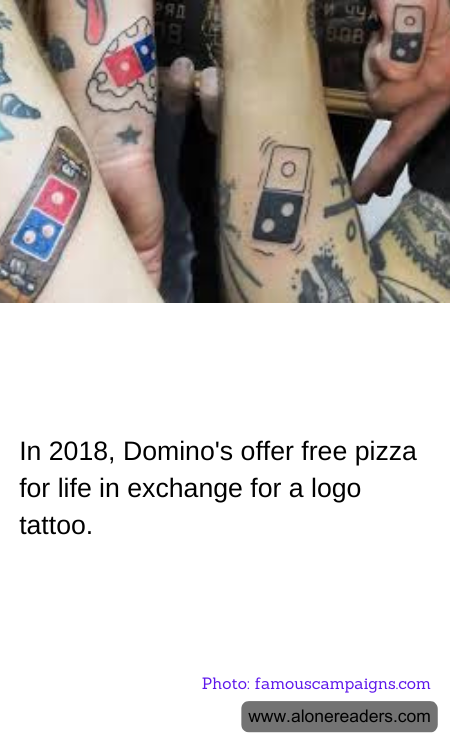
In 2018, Domino’s Pizza in Russia launched a highly unusual, attention-grabbing campaign that promised free pizza for life to anyone who got a tattoo of the company’s logo and met certain conditions. The campaign, aimed at boosting the brand’s presence and engaging with a younger, more dynamic audience, quickly went viral but perhaps not quite as the company had anticipated.
The terms were seemingly simple: participants had to get a tattoo of the Domino’s logo in a prominent place, share the image on social media, and in return, they would receive 100 free pizzas every year for 100 years. The tattoo had to be at least 2 cm in size and visible on parts of the body such as the arms or legs. Enthusiasts jumped at the opportunity, flooding social media platforms with images of their new tattoos, showcasing the company’s distinct red and blue domino piece.
However, the response was overwhelming. Just five days into what was supposed to be a two-month campaign, Domino’s was forced to end the promotion early due to the higher than expected turnout. Initially, there was no cap on the number of participants; however, seeing the vast number of people willing to brand themselves with the logo for free pizza, Domino’s quickly capped the number at 350 and introduced additional rules, including specifying that the tattoo had to be uploaded to social media by a particular date.
This marketing stunt highlighted not just the power of brand loyalty, but also the unpredictability of viral marketing campaigns. While it certainly placed Domino’s in the media spotlight and created buzz around the brand, it also served as a lesson in the importance of setting clear, manageable limits and expectations in promotional campaigns. Moreover, the ordeal raised questions about consumer responsibility and the lengths to which individuals are willing to go for freebies.
Despite the abrupt halt, the campaign was a testament to the daring nature of modern marketing strategies and the strong connections that people have with brands, especially in the age of social media where the lines between brand engagement and personal lifestyle choices are increasingly blurred. This case remains a noteworthy example in marketing studies, illustrating the power of an unusual promotion and the necessary caution when audiences engage beyond expectations.