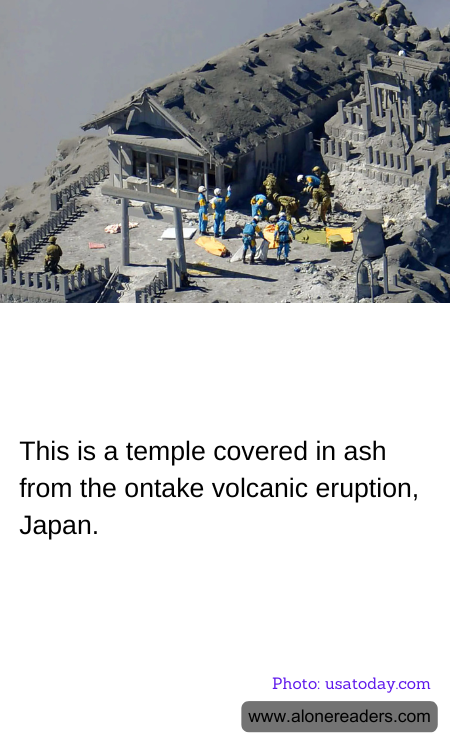
When Mount Ontake in Japan erupted unexpectedly on September 27, 2014, it not only unleashed nature's fury but also left its surroundings cloaked in a thick layer of ash and debris. Among the structures profoundly affected by this natural disaster was a local temple, a serene place of worship that had stood for decades as a testament to spiritual resilience and architectural heritage. The sudden eruption transformed the scenic landscape into a gray, desolate scene, with the temple bearing the brunt of this transformation.
Covered in volcanic ash, the temple's intricate designs and vibrant colors were obscured, rendering it almost ghostly against the ash-laden backdrop. The eruption, which tragically claimed the lives of 58 people and left five others missing, also had a profound impact on the temple's role in the community. Previously a site of bustling activity where locals and travelers alike came to seek solace and spiritual guidance, the temple's surroundings were now silent, tinged with the sorrow and memories of the disaster.
Recovery and clean-up efforts at and around the temple site were painstaking and slow. Ash and debris had to be removed delicately to preserve the sanctity and structural integrity of the temple. The process was not just about physical restoration but also a symbolic cleansing, as community leaders hoped to revive the spiritual sanctuary the temple had once been. The resilience of the temple, despite the calamity, symbolized hope and renewal for many in the community who looked towards rebuilding their lives and reclaiming their spiritual haven.
In the years following the eruption, the temple has slowly regained parts of its former vitality. Rituals and ceremonies have resumed, beckoning the return of locals and visitors alike, seeking peace and reflection. The temple, now a stark reminder of nature's dual character—both creative and destructive—stands as a beacon of the enduring human spirit, resilience, and the collective resolve to move forward after a catastrophe. While the scars of the eruption might never fully disappear, the ash-covered temple remains a poignant symbol of endurance and rebirth in the face of overwhelming adversity.
