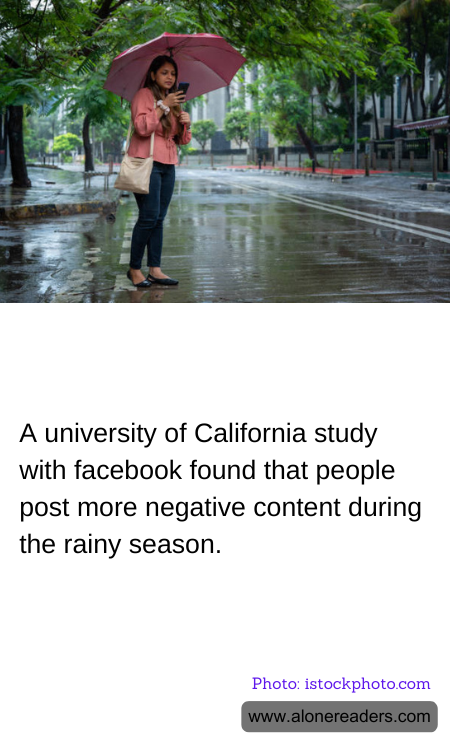
A study conducted by the University of California in collaboration with Facebook reveals a significant trend: people tend to post more negative content on social media during the rainy season. This intriguing finding highlights the profound impact that weather can have on human emotions and social interactions, particularly in the digital sphere.
The research harnessed vast amounts of data collected from Facebook posts, analyzing the emotional content of words used by millions of users over various geographical locations and seasons. By employing advanced algorithms and sentiment analysis techniques, the study identified a clear pattern where users’ posts became noticeably more negative as the amount of rainfall increased in their area.
This correlation between weather and mood on social media is theorized to stem from the psychological effects of weather on mood, known as Seasonal Affective Disorder (SAD), which is more common during darker, rainier months. Rainy weather can often lead to feelings of gloom and confinement, as outdoor activities are curtailed and social interaction decreases. These emotions can translate into more negative expressions when people turn to social media platforms like Facebook to communicate and vent.
Moreover, the increased negativity online during rainy periods may also contribute to a spiraling effect, where the negative sentiments expressed by others can further dampen the mood of other users. This echo chamber effect can magnify the impact of bad weather on general well-being and emphasizes the emotional contagion that can occur on social media platforms.
The findings of this study have significant implications for understanding how external environmental factors can influence online behavior and mood. They suggest that social media platforms could potentially introduce features or interventions to help mitigate the spread of negativity during times expected to have poor weather, possibly enhancing overall user experience and emotional health.
Additionally, this research opens up new avenues for further investigations into how other environmental or seasonal factors could affect social interactions in the digital realm and how these insights could be used to improve social media platforms and user welfare in the long term.
In conclusion, the study not only sheds light on the link between weather and mood on social media but also offers valuable insights into human behavior, providing a reminder of the subtle yet profound ways in which our environment shapes our everyday lives and interactions, even in an increasingly digital world.
