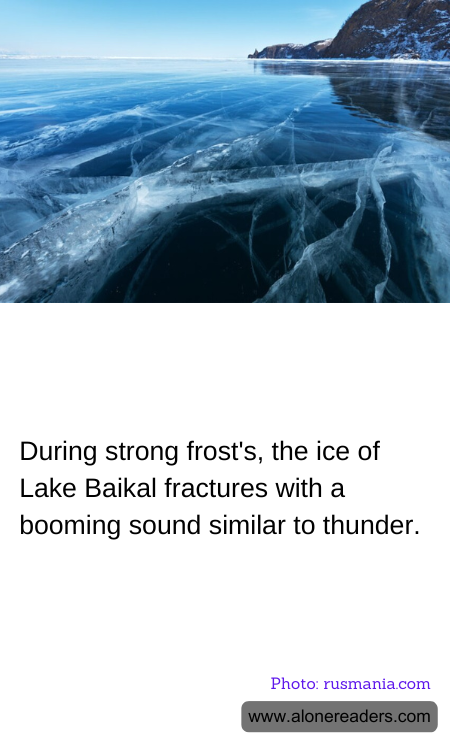
During the icy grip of severe winters, Lake Baikal in Siberia presents a natural spectacle that is both eerie and awe-inspiring. Known as the deepest and one of the oldest freshwater lakes in the world, Lake Baikal holds a record-breaking 20% of the world's unfrozen freshwater. As temperatures plummet, the lake's surface freezes, but not quietly. The thick layer of ice, often several feet deep, is subject to extreme stress due to the immense volume of water beneath it and the fluctuating temperatures above. This stress causes the ice to crack and fracture, producing sounds that reverberate through the crisp air like claps of thunder.
These acoustic emissions are not just simple cracks. They can be surprisingly varied, ranging from sharp, gunshot-like pings to prolonged groans that sound almost otherworldly. At times, the noise can be so powerful that it echoes across the stark winter landscape of Siberia, startling wildlife and echoing through the surrounding mountains. The noise is caused by the expansion and contraction of the ice. Day-to-night temperature shifts make the ice alternately contract in the colder night temperatures and expand under the slight warmth of the sun, stressing the ice until it reaches a breaking point.
The visual aspect of these fractures is equally mesmerizing. The cracks can create complex networks of jagged lines and sometimes perfectly geometrical patterns, like vast, natural artworks etched into the thick, transparent ice. Adventure seekers and photographers from around the world brave the harsh conditions to witness these fractures and capture their stunning beauty. They also offer a unique opportunity for scientific study. Researchers monitor the sounds and the ice to better understand the environmental impacts on the lake and predict similar phenomena in other parts of the world as global temperatures fluctuate.
Thus, Lake Baikal during deep freeze is more than just a natural wonder. It is a dynamic, living laboratory that stuns with its auditory and visual majesty while providing insights into the natural processes that govern our planet. It stands as a reminder of the power and unpredictability of nature, capturing the imagination of all who witness its thunderous ice cracks and the serene, rugged beauty of its frozen surface.
