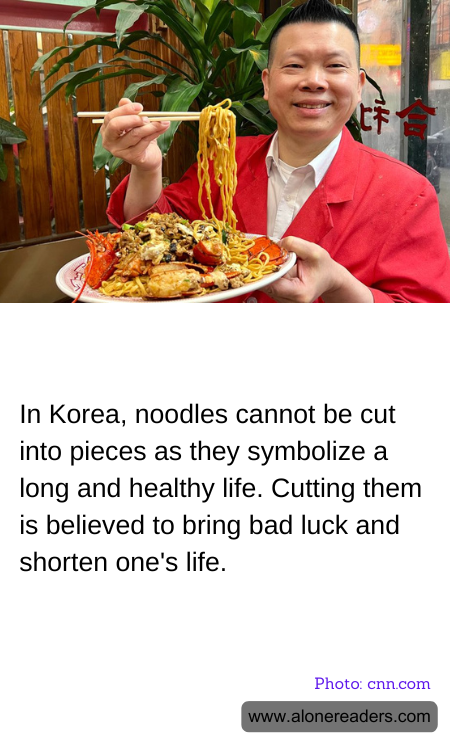
In Korea, the culinary tradition often intertwines with cultural beliefs and superstitions, one interesting example being the handling of noodles. Noodles in Korean cuisine are much more than just a staple food; they carry significant symbolic weight, particularly regarding longevity and prosperity. Long noodles symbolize a long life, hence they are often served at birthday celebrations and other significant events as a gesture of wishing someone a long, healthy life.
Because of this strong association, there is a prevailing belief in Korea that cutting noodles could bring about bad fortune or even shorten one's life. This cultural taboo reflects a broader understanding of food not just as sustenance but as a vital component of spiritual and social practice. As a result, when consuming dishes like Japchae (stir-fried sweet potato noodles), Ramyeon (instant noodles), or the traditional birthday soup called Tteokguk, which includes thinly sliced rice cakes and often noodles, Koreans make it a point to slurp up the long noodles whole without cutting them.
The reverence for noodles and their preparation highlights the philosophical perspective in Korean culture towards respecting what is served on the plate. This respect for food extends beyond noodles; it encompasses many aspects of Korean culinary practice, focusing on presentation, preparation, and communal sharing. This intertwining of cuisine and superstition in Korea not only preserves tradition but also teaches the values of hope, health, and celebration through the simple act of enjoying a meal.
