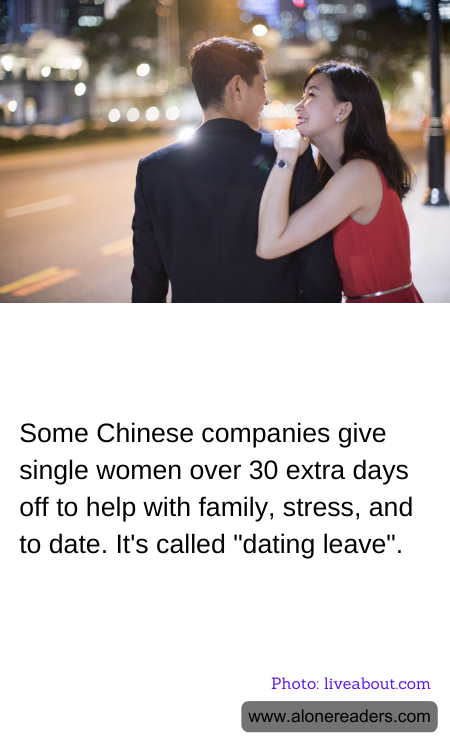
In recent years, a unique corporate policy has surfaced in China where some companies are offering extra days off specifically to single women over the age of 30. Dubbed "dating leave," this benefit is touted as a way to give these employees additional time to focus on personal life aspects, such as dating, family, and mental health. This trend was primarily seen in companies located in eastern China, and has sparked a broad discourse on work-life balance, societal expectations, and gender roles in the workplace.
While the policy's intention might appear progressive and supportive, it is deeply rooted in the societal pressures and stigmas faced by single women in China. Often labelled as 'Sheng Nu' or 'leftover women', these women face immense pressure from society and family to marry before they are considered too old. This label, deeply derogative, implies a diminishing value of women who are single past a certain age. The introduction of "dating leave" by some employers seems to be an attempt to alleviate some of this pressure, albeit in a way that acknowledges and perhaps inadvertently reinforces these same societal norms.
The additional leave often includes eight to ten days around traditional Chinese holidays, notably the Chinese New Year, when societal and familial pressures intensify for many singles as family gatherings are frequent. This is seen as an opportune moment to engage in dating or focus on personal relationships outside of the demanding work schedules that are common in China.
Responses to the implementation of this leave have been mixed. Some see it as a considerate allowance that acknowledges the personal needs of employees, promoting a healthier work-life balance. For single women who may prioritize their careers and delay marriage, this leave provides a sanctioned way to dedicate time to personal life, which could enhance overall happiness and job satisfaction.
Critics, however, argue that the policy could also segregate and stigmatize. Highlighting one's marital status and implicitly underscoring an expectation to utilize the leave for a specific purpose—such as dating—can reinforce stereotypes. This could also lead to workplace discrimination, where women might be seen as less committed to their careers simply because societal expectations are directed towards their personal lives.
Overall, while "dating leave" might appear as a superficially appealing concept aimed at supporting single women, it is a complex interplay of gender, cultural expectations, and corporate responsibility. It raises significant questions about the best ways to support employees without reinforcing outdated stereotypes or making assumptions about their personal goals. As global perspectives on work-life balance continue to evolve, such policies spotlight the ongoing dialogue about how best to support diverse employee needs while challenging societal norms.
