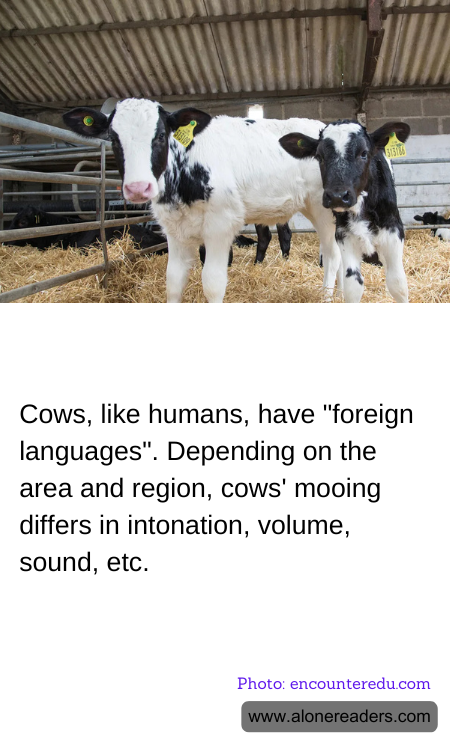
Cows, much like humans, exhibit an interesting linguistic capacity through their vocalizations, which can vary significantly depending on their geographical locations. This phenomenon, often likened to human foreign language differences, suggests that cows have distinct "accents" or variations in their mooing. Research has shown that these differences are not just random but are influenced by the cow's environment, including the specific herd and region in which they live.
The study of cow vocalizations has revealed that the variations in sound can be linked to various factors including the need for communication among cows themselves. For example, when cows are separated from their calves, their calls can vary in pitch and intensity, which helps both mother and calf recognize each other's calls amidst a multitude of other noises. This specificity in vocalization helps maintain strong bonds and communication within the herd.
Moreover, the variances in cow moos across different regions could be a response to the acoustic environments of their habitats. Just as humans develop dialects influenced by regional linguistic features, cows too may adapt their calls in response to their immediate social and environmental landscapes. Researchers speculate that different "dialects" can emerge within cow populations as they adapt their vocalizations to be better understood by their peers, which could be particularly enhanced by the isolation of herds in distinct geographical areas.
Furthermore, the implications of these findings are not just limited to understanding cow communication. They can also significantly impact how farmers manage and interact with their herds. By tuning into the specific vocalizations of cows, farmers can more effectively monitor the well-being and stress levels of their cattle, potentially leading to improved animal welfare practices.
This fascinating aspect of cow communication underscores a broader principle observed across many species: language and vocalizations are not solely human faculties but are pivotal components of survival and social interaction in the animal kingdom. As research continues, understanding the nuances of cow "languages" not only adds depth to our understanding of animal behaviour but also enhances our capacity to empathetically manage and care for domesticated animals.
