More About This Card
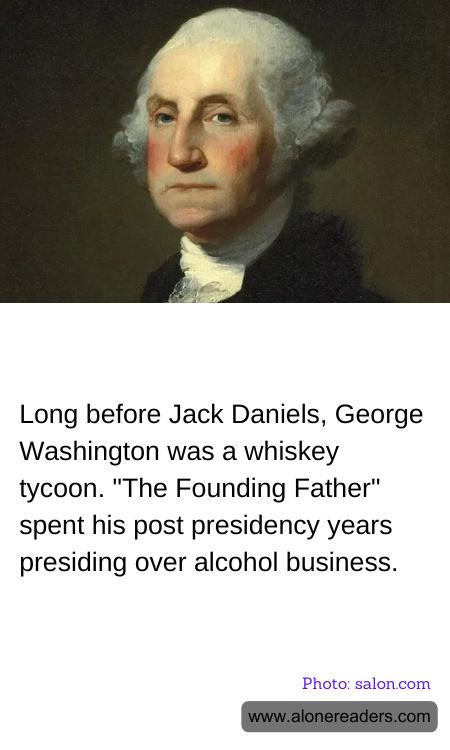
In the annals of American history, George Washington is celebrated primarily for his central role as a military leader in the American Revolution and as the nation's first president. However, less commonly known is his entrepreneurial venture into the whiskey business following his presidency. Washington established one of the largest whiskey distilleries in early America at his Mount Vernon estate, marking an intriguing chapter in his post-presidential life.
After his two terms as president, Washington returned to Mount Vernon with an interest in diversifying the products produced on his estate. In 1797, following the advice of his Scottish farm manager, James Anderson, Washington ventured into distilling whiskey and quickly turned it into a profitable enterprise. Anderson, experienced in distilling, influenced Washington's decision, asserting that a distillery would benefit from the abundant crops of rye and corn harvested at Mount Vernon.
The distillery was initially modest but expanded significantly after proving its economic value. By 1799, it had grown into one of the largest whiskey distilleries in America, producing over 11,000 gallons annually. These operations showcased an innovative and quite modern approach to alcohol production during that period, leveraging the latest distilling techniques and a conscientious approach to labor, involving both paid workers and enslaved African Americans.
This entrepreneurial endeavor adds a complex layer to Washington’s legacy. The distillery was not merely a side project; it was an integral part of his economic strategy, reflecting his ability to adapt and innovate. Moreover, this operation provided insight into Washington's views on slavery and economy, as he navigated his roles both as a slave owner and as an economic leader trying to position his estate for future financial independence.
The whiskey business was short-lived, however, as it declined rapidly after Washington's death in 1799. The distillery fell into disrepair and was eventually forgotten as focus shifted onto more traditional aspects of his legacy. Nevertheless, the distillery has been reconstructed in recent years and now serves as a museum and educational site, providing insights into this lesser-known aspect of his life.
George Washington's involvement in the whiskey industry serves as a reminder of the multifaceted characters that built the foundations of the United States. It underscores the blend of political leadership, military prowess, and business acumen that characterized many of America's founding figures, and it challenges the singular, often oversimplified, narratives of historical figures. This aspect of Washington’s life offers a nuanced view of the man behind the myth, illustrating his engagement in the practical and mercantile endeavors that were essential to the economic building of the new nation.