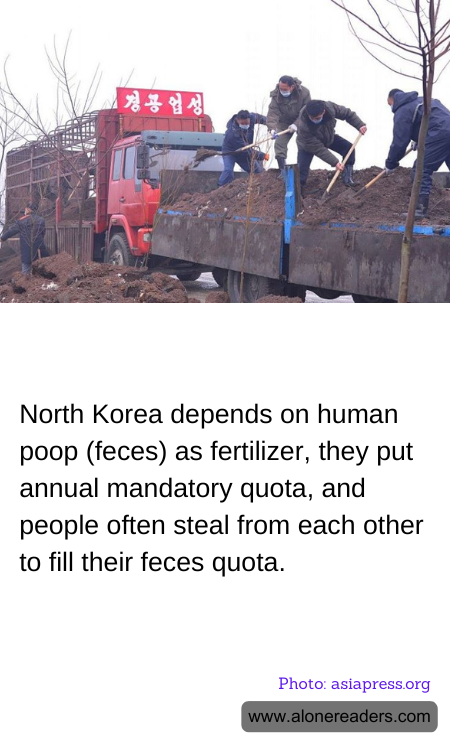
In North Korea, the agricultural sector faces significant challenges due to the scarcity of chemical fertilizers, which has led the government to rely heavily on human feces as an alternative. Faced with international sanctions and limited access to traditional agricultural inputs, North Korea has implemented a policy that includes an annual mandatory quota of human feces, which each citizen is required to contribute for agricultural use. This policy aims to enhance crop yields by using human waste as a natural fertilizer.
The drive to meet these quotas has, somewhat unsurprisingly, given rise to a peculiar form of theft: feces theft. The imposition of the quota has led to instances where citizens steal from each other’s collections to meet their own fecal contributions. This circumstance highlights the extreme measures to which North Koreans are pushed in order to fulfill governmental demands and underscores the broader issues of resource scarcity and management in the country.
The use of human feces as fertilizer is not unique to North Korea; it has been a traditional practice in agricultural societies for centuries. Often referred to as "night soil," historically, it has been used in various parts of the world to enhance soil fertility. However, the practice carries health risks if not properly treated, including the transmission of diseases and parasites. Despite these risks, the pressing need for agricultural productivity in North Korea has made it an essential and state-imposed part of farming life.
Furthermore, this policy sheds light on the broader socio-economic and political pressures that North Koreans face. The government’s rigid control over resources and its unorthodox methods of dealing with shortages place a significant burden on the populace. These measures are a reflection of the country's isolation and the government's approach to self-reliance, which often places extraordinary demands on its citizens.
In summary, North Korea’s reliance on human feces as fertilizer not only illustrates the desperate measures necessitated by economic and political isolation but also raises issues about public health and the extreme lengths to which people are driven under stringent state policies.
