More About This Card
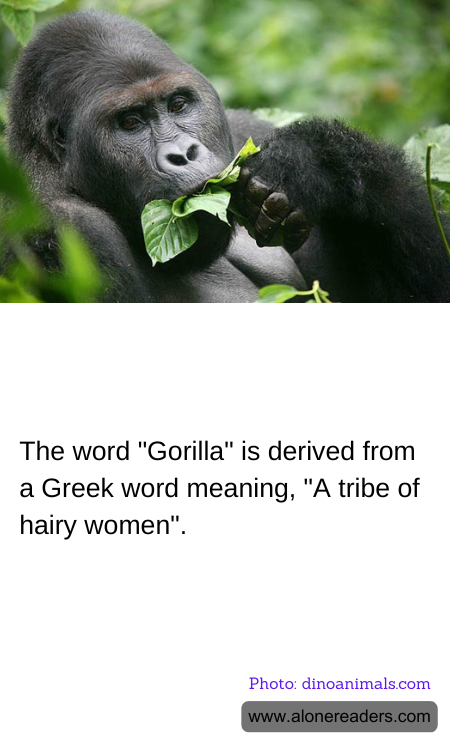
The etymology of the word "gorilla" takes us back to a rather amusing and unlikely description. It stems from the Greek word "Gorillai," referring to a "tribe of hairy women." This term was first used in the Western world due to the accounts of the Carthaginian explorer Hanno the Navigator, who sailed along the coast of West Africa around 500 BCE. According to Hanno’s account, he encountered a tribe of hairy and aggressive women, whom his interpreters called "Gorillai." Misunderstanding or perhaps misinterpreting what they actually saw, the ancient explorers might have actually encountered a group of gorillas, not human beings. This account was later translated and read by explorers during the Renaissance, which influenced the naming of the gorilla when it was officially identified as a distinct species in the 19th century.
The term gorilla was scientifically adopted in 1847 by American missionary and physician Thomas Staughton Savage and naturalist Jeffries Wyman. They used the species name "Gorilla gorilla" based on specimens obtained in Liberia. The word has since become synonymous with these large apes that are native to the forests of central Sub-Saharan Africa. Gorillas are the largest living primates and are known for their robust build and shy nature, a far cry from the aggressive creatures described by Hanno. Over decades of study and observation, gorillas have been found to be gentle and intelligent, often showing deep familial bonds and complex social structures in their troops.
The name, originating from a centuries-old misunderstanding, highlights how myths and stories can shape our perception of the natural world. It also serves as a reminder of our evolving understanding of wildlife, from mythical interpretations to scientific study and appreciation. Today, the conservation of gorillas is critical, as their populations are threatened by habitat loss, disease, and poaching. Efforts by conservationists around the world aim to protect these majestic creatures and their habitats, ensuring that the real gorillas are understood and appreciated, far beyond the mythical "tribe of hairy women" from ancient lore.