More About This Card
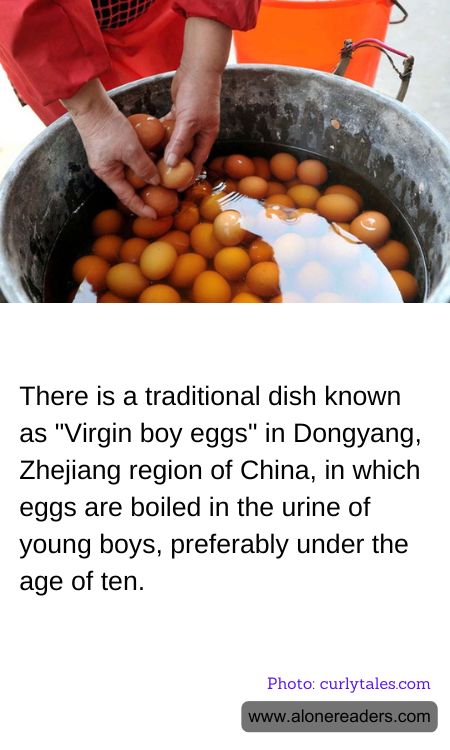
In the Dongyang, Zhejiang region of China, there exists a unique and centuries-old culinary tradition known as "Virgin Boy Eggs." This local delicacy, steeped in tradition, requires a rather unusual ingredient: the urine of young boys, ideally under ten years old. Every spring, the practice comes to life as vendors collect urine from local schools, where buckets are placed for boys to contribute to this distinctive cause.
These eggs, boiled in the collected urine, are cooked until they turn golden brown and are believed to possess various health benefits. Locals claim that consuming these eggs can help prevent heat stroke, promote better blood circulation, and rejuvenate the body. The tradition is not only a culinary practice but also a culturally significant symbol of health and vitality, deeply ingrained in the local lifestyle.
The process of making Virgin Boy Eggs involves several meticulous steps. Eggs are first soaked and then boiled in urine, which is collected fresh daily. The aroma is described as distinctly strong and the flavor as surprisingly salty. After boiling, the shells of the eggs are cracked slightly and then simmered for hours in the same urine, allowing them to absorb more flavor and nutrients.
Despite its health claims, the dish is met with mixed feelings outside the local community. Many view the practice as outdated and unhygienic, leading to concerns about the safety and the rights of the children involved in urine collection. However, within Dongyang, these eggs are celebrated during the local spring festivals and continue to be a source of pride and tradition.
The controversy surrounding Virgin Boy Eggs has sparked discussions on cultural relativity, traditional practices, and modern health codes. While it remains a revered tradition in Dongyang, it stands as a stark example of the vast diversity in global culinary practices and the complexities involved in preserving such traditions in the modern world. Whether one finds the practice intriguing or unsettling, Virgin Boy Eggs undeniably offer insight into the rich tapestry of cultural heritage and the lengths to which humans will go to maintain connection to their past.