More About This Card
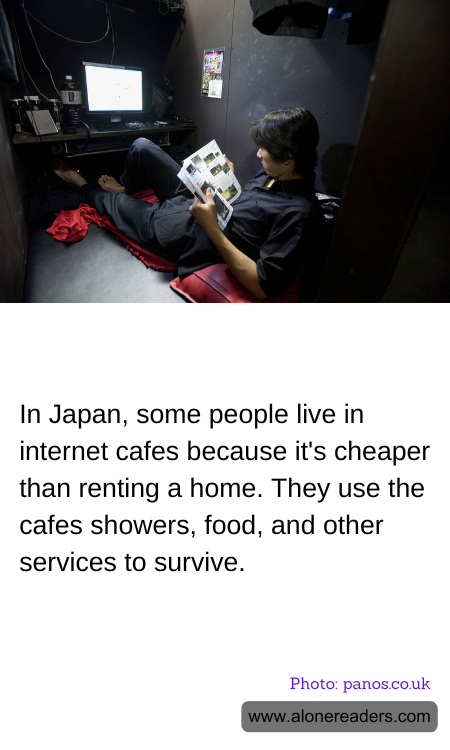
In Japan, a surprising trend has emerged where individuals, often dubbed "cyber-homeless," live permanently in internet cafes. These cafes, which operate 24/7, offer a relatively inexpensive alternative to traditional housing. Living in an internet cafe might seem unconventional, but for many, it is a practical response to the country’s high cost of living and limited social security systems.
Internet cafes in Japan offer more than just internet access. They are typically equipped with showers, laundry facilities, and even serve food and drinks. For a nightly fee, visitors can stay in a private booth that usually includes a reclining seat or a flat space with a mat. These booths provide a certain degree of privacy, and the cafe environment offers amenities that might be less accessible in more expensive, compact urban apartments. The cost of staying in these cafes can be significantly cheaper than renting an apartment, especially considering the additional expenses such as utility bills and lease contracts that often require hefty deposits and key money—a non-refundable payment to the landlord.
This way of living has become an integral part of the reality for many Japanese workers, particularly those in lower-wage freelance and part-time jobs without job security. These residents typically manage, despite the cramped and stark conditions, enjoying access to entertainment like movies, games, and unlimited internet, which helps to alleviate the stress of their living situation.
However, this phenomenon highlights broader societal issues such as income inequality and housing shortages in urban areas. It also begs the question of the mental and physical health implications for those who live in such constrained and provisional spaces over a long period. While internet cafes offer a makeshift solution, they are not equipped as permanent living quarters. The lack of proper sleep accommodations and nutritional food options may contribute to health problems over time.
In response to this issue, some local governments and social organizations in Japan have started to recognize and address the needs of the cyber-homeless. Initiatives are being introduced to provide more affordable housing options and to expand social services to assist these vulnerable populations more effectively.
Living in internet cafes is a stark reminder of the challenges many face in bustling metropolitan areas and shines a light on the importance of comprehensive and inclusive urban planning and social welfare programs. As Japan continues to grapple with economic and social challenges, the lives of those residing in internet cafes serve as a potent example of resilience and adaptability amidst adversity.