More About This Card
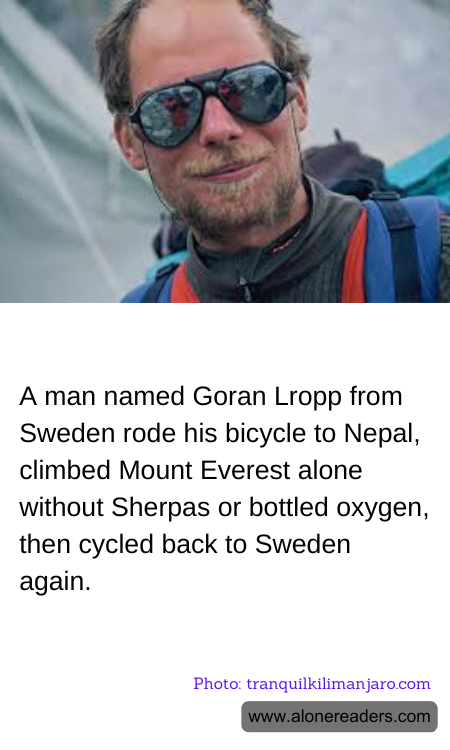
In a truly remarkable feat of endurance and determination, Goran Lropp, a Swedish adventurer, embarked on an extraordinary journey that not only tested the limits of physical endurance but also exemplified extreme self-reliance and commitment to sustainable travel. Lropp's adventure began in Sweden, from where he set off on his bicycle, a journey that spanned thousands of miles across diverse terrains and multiple countries, leading him all the way to Nepal.
Upon reaching Nepal, Lropp did not pause long. He proceeded to tackle one of the most challenging and revered peaks on the planet: Mount Everest. What made his ascent of Everest extraordinary was his decision to do so alone, without the assistance of Sherpas, and crucially, without supplemental oxygen—a feat that only a handful of climbers have ever attempted. This climb required meticulous planning, as he had to acclimate his body to the extreme altitudes and prepare mentally for the isolation and physical demands of such a climb.
After successfully summiting Everest, Lropp descended back to his base camp, where he did not linger. He promptly mounted his bicycle for the long journey back to Sweden, retracing his tracks through the varied landscapes and climates he had traversed on his way to Nepal. His return journey was no less challenging, demanding consistent mental and physical endurance.
Lropp’s incredible journey from Sweden to Everest and back on a bicycle is a testament to the human spirit's resilience and capability. It also highlights a deep commitment to eco-friendly travel methods, emphasizing the power of human will over reliance on technology and mechanized assistance. Lropp’s story is not just about adventure; it's also about raising awareness of the potential for human-powered transportation and the need for sustainable interaction with our environment. His journey remains a source of inspiration and a benchmark for adventurers worldwide.