More About This Card
The comparison between the computing capabilities of modern smartphones and the computers used during the Apollo 11 moon landing in 1969 is nothing short of staggering. At a time when mankind was taking its first steps on the Moon, the entire operation was guided by computers that had less processing power than what we carry in our pockets today.
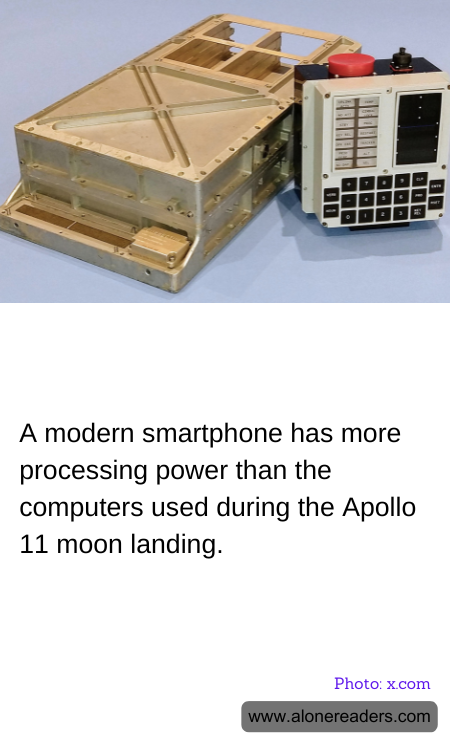
The Apollo Guidance Computer (AGC), developed by MIT, was a remarkable piece of technology for its time. With a processor speed of 1.024 MHz and about 64 KB of memory (of which only 4KB was RAM), it was designed specifically to handle navigation and control systems of the Lunar Excursion Module (LEM) and Command Module (CM), the spacecraft responsible for carrying astronauts to and from the moon. Despite its limited capacity by today's standards, the AGC was integral in guiding the astronauts safely to the Moon and back.
In comparison, a typical modern smartphone is a powerhouse. The average smartphone now operates with a processor speed that is hundreds of times faster, typically ranging from 1.8 to 2.9 GHz. Furthermore, smartphones come equipped with 4GB to 16GB of RAM and extensive internal storage, capabilities that dwarf the rudimentary specifications of the AGC. These devices also support complex applications and multitasking operations that were unimaginable five decades ago.
The evolution in computing power is not only marked by the technical specifications but also by accessibility and applications. While the AGC was a specialized tool designed for a specific, groundbreaking task, smartphones are versatile devices used daily by billions of people for purposes ranging from communication and entertainment to navigation and business transactions.
This immense growth in computing power signifies more than just technological advancement; it represents an exponential increase in human potential. The processing capabilities in our hands can manage tasks that were once the sole domain of large, specialized computers in major institutions. Tasks such as real-time video editing, sophisticated graphic designing, and running complex scientific simulations can now be performed almost anywhere, anytime.
Reflecting on this phenomenal technological leap, it's a testament to human ingenuity and a poignant reminder of how far technology has come since Apollo 11. As we continue to innovate and push the boundaries of what's possible with technology, the comparison between then and now not only highlights progress but also inspires future possibilities in aerospace technology and beyond.