More About This Card
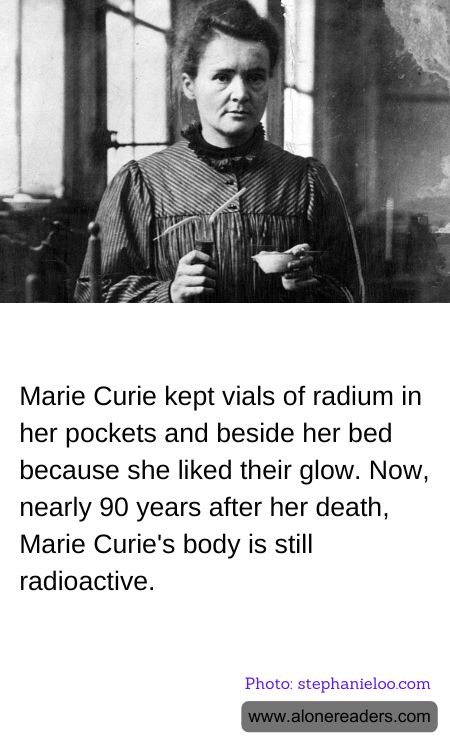
Marie Curie, a pioneering scientist best known for her work on radioactivity, made groundbreaking discoveries that earned her two Nobel Prizes in both Physics and Chemistry. Her fascination with radium, one of the elements she discovered, extended beyond the laboratory. Curie often carried vials of radium, stowed away in her pocket or placed beside her bed, captivated by the soft, intriguing glow they emitted. This glow was the result of radioactive decay, a process that Curie herself helped to understand and articulate. However, the harmful effects of radiation were not well-known during her time, and the precautions necessary for handling radioactive materials were not yet established.
Marie Curie's relentless devotion to her research eventually led to her death in 1934 from aplastic anemia, a disease believed to have been caused by prolonged exposure to high levels of radiation. Her constant contact with radioactive substances, like the radium she once marveled at, contributed significantly to her illness. Today, nearly 90 years after her death, Marie Curie's remains are still radioactive. Such is the extent of her contamination that her papers from the 1890s, including her research notes and personal belongings, are also reported to be radioactive. They are now stored in lead-lined boxes, and those who wish to consult them must wear protective clothing.
Marie Curie's story is not just a tale of scientific achievement, but also a poignant reminder of the risks scientists can face in their quest for knowledge. Her life underscores the importance of handling scientific discoveries with care, understanding their breadth, and their potential implications. Curie's experiences also paved the way for advancements in scientific safety protocols and the handling of radioactive materials, setting precedents for future research in the field of nuclear science and beyond. Her legacy, instilled in every glowing vial she once held close, continues to illuminate the dual edges of scientific discovery—its limitless potential and its potential for peril.