More About This Card
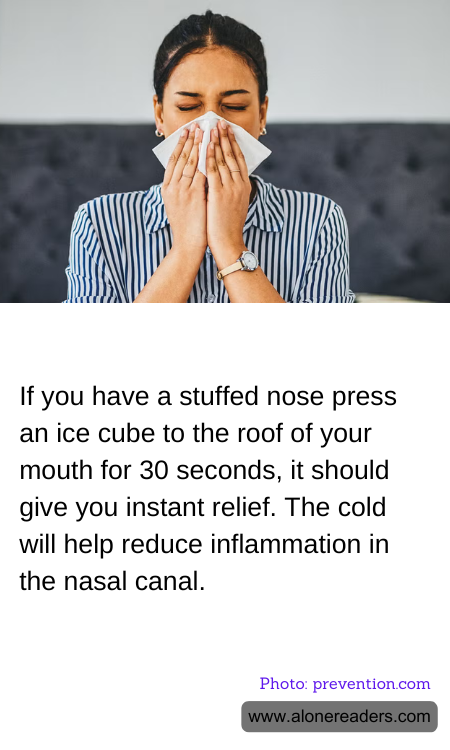
While dealing with a stuffed nose can be quite uncomfortable, numerous home remedies are suggested to alleviate this condition. One such remedy involves pressing an ice cube to the roof of your mouth. This approach is based on the idea that the cold from the ice cube can help reduce inflammation in the nasal passages, thus providing temporary relief. The roof of your mouth, or the hard palate, is close to the sinuses, and cooling this area is thought to cool the blood vessels in the sinus region, thus reducing swelling and easing congestion.
However, it's important to approach this method with some caution. Firstly, the relief provided can be temporary, as it does not address the root cause of the nasal congestion. Common causes of a stuffed nose include allergies, infections like the common cold or flu, and sinusitis, all of which might require more targeted medical treatment. Additionally, holding an ice cube in your mouth should be done carefully to avoid frostbite and other discomforts to the sensitive tissues in your mouth.
For a more comprehensive approach to relieving nasal congestion, other strategies might be more effective. These include using saline nasal sprays, which help to moisten the nasal passages and thin the mucus, or inhaling steam, which can also soften and mobilize mucus in the airways. Over-the-counter decongestant sprays can provide relief, but they should be used for only a few days to avoid rebound congestion.
Moreover, staying hydrated is crucial as it helps to thin the mucus, making it easier to expel. Incorporating a humidifier in your environment can also aid in keeping the nasal passages moist, especially in dry climates or during winter when indoor heating can dry out the air.
In conclusion, while pressing an ice cube to the roof of your mouth might offer quick, temporary relief from nasal congestion, it's essential to consider other remedies and practices for more sustained relief and to address any underlying conditions that might be causing the congestion. Consulting with a healthcare provider is advisable if symptoms persist or worsen, to ensure appropriate treatment and care.