More About This Card
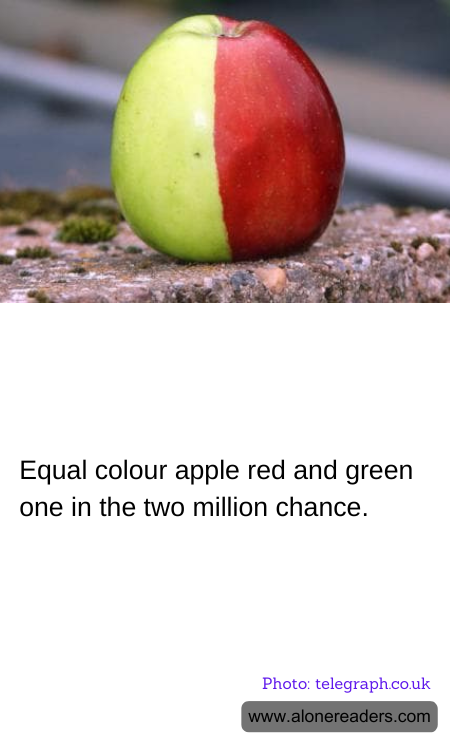
In the vast palette of nature’s bounty, the apple, a universal symbol of temptation and health, presents a particularly enchanting anomaly when one encounters an apple that is perfectly divided into equal halves of red and green. This rare phenomenon, occurring once in approximately two million apples, captures the imagination of both horticulturists and enthusiasts alike.
Apples generally display a predominant color, ranging through various shades of red, green, and yellow, depending on the variety. The environment plays a significant role in the pigmentation of apple skins. Factors such as sunlight, temperature, and genetic makeup influence the levels of anthocyanins and chlorophyll, pigments responsible for red and green hues, respectively. However, the occurrence of an apple equally split down the middle with contrasting colors transcends common botanical expectations, suggesting a fascinating genetic and environmental interplay.
The rarity of such apples turns them into a botanical curiosity. When such anomalies occur, it is often due to a rare form of genetic mosaicism. Here, cells in one part of the apple express different genetic makeup than cells in another, leading to the distinct halves. In some instances, this can happen when there is an unusual distribution of pigments during the fruit's development, possibly influenced by localized conditions of light and temperature.
Beyond the visual spectacle, these bicolored apples hold the same taste and nutritional benefits as their uniformly colored counterparts. They provide a rich source of dietary fiber, vitamin C, and various antioxidants, beneficial for heart health, diabetes management, and overall wellness. The stark contrast in their appearance does not affect their edibility or health benefits, making them not just a visual treat but also a nutritious one.
The emergence of such an apple could potentially spur interest among growers and scientists in the genetic manipulation of fruit trees for aesthetic and commercial purposes. Meanwhile, for the everyday observer or the lucky gardener who might spot one, a perfectly half-red, half-green apple serves as a delightful reminder of nature's capacity for wonder and variability. The fruit stands as a testament to the serendipitous beauty that can occur when just the right natural factors align, making it a sought-after prize for apple aficionados and a captivating subject for photographers and nature lovers.