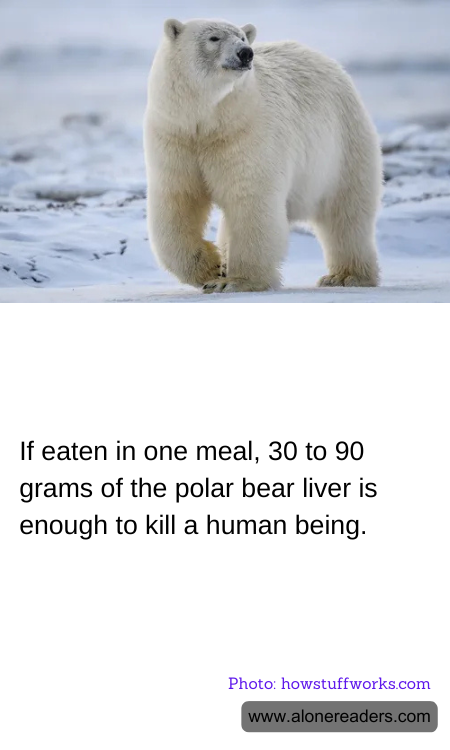
Polar bear liver is laden with an astonishingly high level of Vitamin A, which can be fatally toxic to humans if ingested in large amounts. Typically, the liver of an average adult polar bear contains millions of units of Vitamin A, far exceeding the tolerable upper intake level for humans. It's widely reported that consuming between 30 to 90 grams of polar bear liver could lead to hypervitaminosis A, a serious condition resulting from vitamin A toxicity, and potentially result in death.
The symptoms of vitamin A overdose can be severe and rapid in onset, beginning with nausea, vomiting, headache, dizziness, and blurred vision. As the condition progresses, more serious symptoms may develop such as swelling of the brain, liver damage, and even coma. The long-term consequences of a less severe acute overdose might include osteoporosis and hair loss.
The recognition of the risks associated with consuming polar bear liver has historical roots; Arctic explorers and Indigenous Peoples of polar regions have known about and experienced the consequences of eating this organ. They observed and learned, sometimes through fatal outcomes, that consuming the liver of polar bears (and certain other animals high in Vitamin A, like huskies and seals) should be avoided.
The phenomenon highlights a critical aspect of traditional ecological knowledge and dietary practices adapted to local environments. Indigenous communities have long navigated the delicate balance of nutrient-rich, yet potentially toxic natural food sources, utilizing preparation methods and consumption guidelines passed down through generations to minimize risks.
With modern science, the understanding of vitamin A toxicity from polar bear liver offers a critical reminder of the potent biological effects certain natural foods can carry, further emphasizing the necessity for awareness and caution in dietary choices, particularly in unusual or extreme environments. For most people, encountering polar bear liver is unlikely, but the underlying lesson remains valuable across different contexts: understanding and respecting the natural properties of the foods we consume is crucial for maintaining good health.
