More About This Card
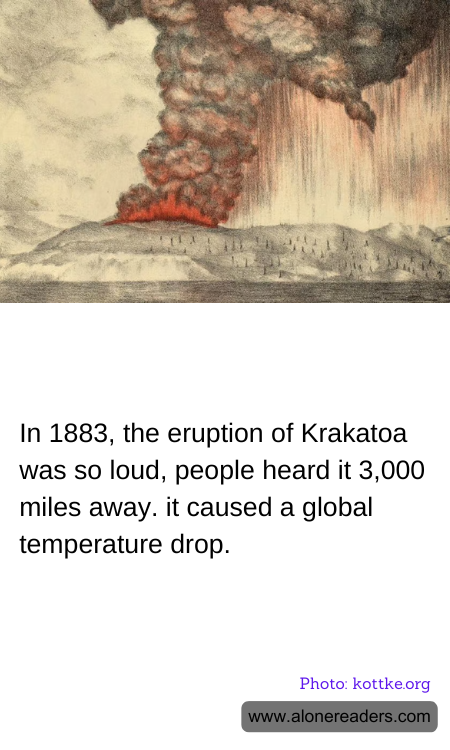
In 1883, the world experienced one of the most catastrophic volcanic events in recorded history—the eruption of Krakatoa, an island volcano located in the Sunda Strait between the islands of Java and Sumatra in Indonesia. The eruption reached its zenith on August 27, 1883, producing a series of explosions that were so powerful they were heard as far as 3,000 miles away in Australia and the island of Rodrigues near Mauritius. This incredible distance underscores just how immense the eruption’s power was, with sound waves circling the globe several times.
The cataclysmic event didn't just awe with its auditory might; it also had profound and lasting effects on the global climate. The eruption expelled massive volumes of ash and sulfur dioxide into the stratosphere, exceeding any volcanic event in over a century. This vast plume of ash and gases created a kind of veil around the planet, which significantly reduced the amount of sunlight reaching the Earth’s surface. As a result, global temperatures dropped by as much as 1.2 degrees Celsius in the year following the eruption. This period was marked by unseasonable weather, including abnormally cold and rainy conditions during what should have been the warm and dry months in many parts of the world.
The climatic disruptions brought about by Krakatoa’s eruption had various ecological and social impacts. Harvests failed in multiple regions, leading to food shortages and increased prices. In some places, the cooler temperatures combined with the increased precipitation contributed to what were called the "Krakatoa Harvests" — delayed or drastically reduced harvests that caused significant hardship for many communities.
Moreover, the atmospheric effects of the eruption were visible in the skies for years after the event. Spectacular sunsets and strange optical phenomena, such as the vivid afterglows known as "Bishop’s rings," were common, caused by the fine ash and aerosol particles high in the atmosphere scattering sunlight. These vivid atmospheric effects inspired artists and writers globally, leaving a lasting cultural imprint alongside its environmental impacts.
Krakatoa's 1883 eruption remains a stark reminder of nature's power and its ability to affect global systems. It underscores the interconnectedness of geological activity and climate, a relationship that continues to be relevant in today’s discussions about climate change and environmental management. The historic event also helped spur the development of volcanic studies and remains a key case study in the field of volcanology.