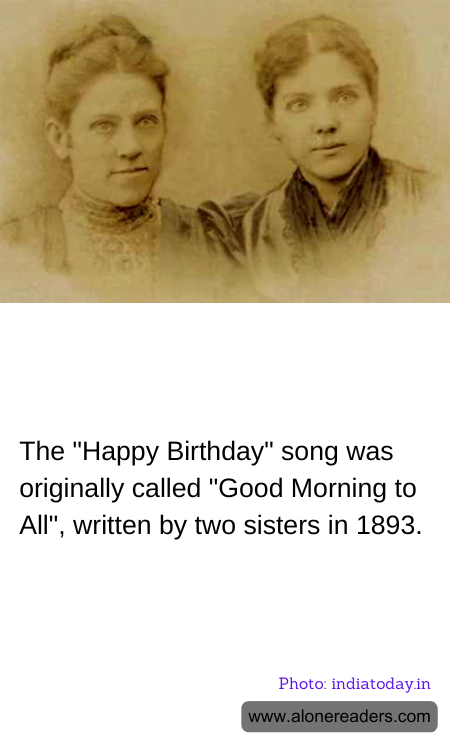
Imagine singing “Good Morning to All” instead of “Happy Birthday” every time someone celebrates another trip around the sun. This famous tune, which has been a staple at birthday parties across the globe, actually began its life under a completely different name. It was composed in 1893 by Patty Hill and her sister Mildred J. Hill, two kindergarten teachers in Louisville, Kentucky. Their intention was to create a simple and catchy song that could be easily sung by young children.
The original lyrics, “Good morning to you, Good morning to you, Good morning, dear children, Good morning to all,” were part of their educational method, aimed to greet students in a fun way. However, the melody proved so popular and versatile that it didn’t take long for the lyrics to be adapted to fit other occasions. By the early 1900s, the tune had been slightly modified and began to be sung as “Happy Birthday to You,” the version we all know today.
The transition from classroom song to birthday anthem wasn't documented thoroughly, leading to numerous debates and legal battles over the copyright of the "Happy Birthday" lyrics and melody that lasted more than a century. It was only in 2016 that a federal judge declared the song to be in the public domain, ensuring that it could be sung freely at birthday parties everywhere without fear of infringing on copyright.
The melody of “Good Morning to All” has become one of the most recognizable tunes worldwide, showcasing the universal appeal of a simple, heartwarming melody. It serves as a profound reminder of how music can transcend its original purpose and setting to become a global shared cultural phenomenon. Despite its ubiquitous presence at birthday candles and celebrations, many might not be aware of its humble beginnings in a Kentucky classroom. This background enriches the song's legacy and echoes the lasting impact of two sisters who merely aimed to brighten their students' school days.
