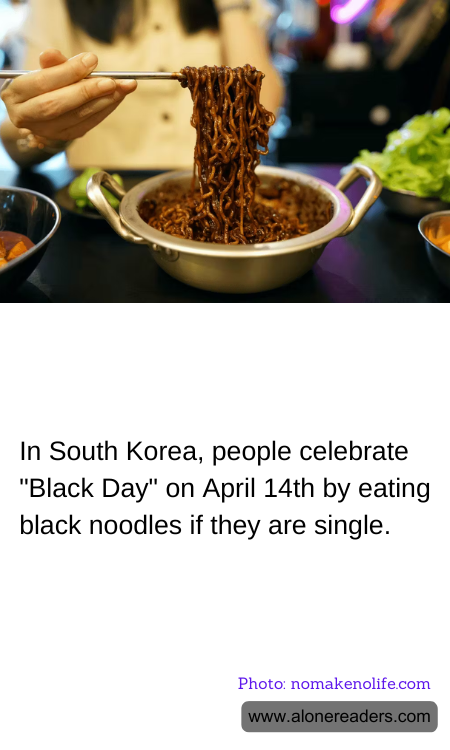
In the vibrant tapestry of South Korean culture, where there's a day for lovers and even two for friends, there exists a unique observance for the singles too. Come April 14th, those who haven’t received gifts on Valentine's Day (February 14th) or White Day (March 14th) have their own peculiar yet intriguing celebration known as Black Day. This day serves as a sort of comedic relief and communal healing process for those who find themselves unattached amidst a season filled with romantic celebrations.
Black Day shies away from typical festive colors and instead adopts a more monochrome tone where single individuals gather to commiserate or even celebrate their solo status by indulging in a dish called "jajangmyeon." Jajangmyeon, which translates to black bean paste noodles, is a beloved Korean Chinese fusion dish. The noodles are thick and hearty, coated in a savory, umami-rich black bean sauce made from chunjang (a salty black soybean paste), diced pork, and vegetables. Often, this dish is accompanied by sides like danmuji (yellow pickled radish) and raw onion dipped in chunjang. The act of eating these black noodles symbolizes solace and solidarity among those who participate.
While at first glance, Black Day might appear somber or even melancholy, the atmosphere is quite the opposite. This day provides an opportunity for single people to either lament or rejoice over their romantic status in the company of others who share their plight. It's not uncommon for people to dress in black as a humorous nod to the "mourning" of their single status. Moreover, this celebration has grown to include social events such as jajangmyeon eating contests, speed dating, and gatherings that help singles meet new friends or possibly future partners.
The significance of Black Day extends beyond mere commiseration; it is an embracement of all life statuses. It uplifts the notion that being single is not a predicament but a momentary state that deserves recognition and even celebration. It also serves as an informal critique of the societal pressures surrounding romantic relationships, providing a platform for individuals to express and embrace their individuality.
Black Day, thus, reflects the evolving social dynamics within South Korea, acknowledging that happiness and fulfillment need not be anchored solely by romantic associations. By celebrating singleness openly, it promotes a broader acceptance of diverse life choices and relationship statuses. Such observance not only enriches Korean culture but also speaks volumes about the progressive social fabric of modern societies worldwide, encouraging everyone to appreciate every phase of their lives, regardless of their relationship status.
