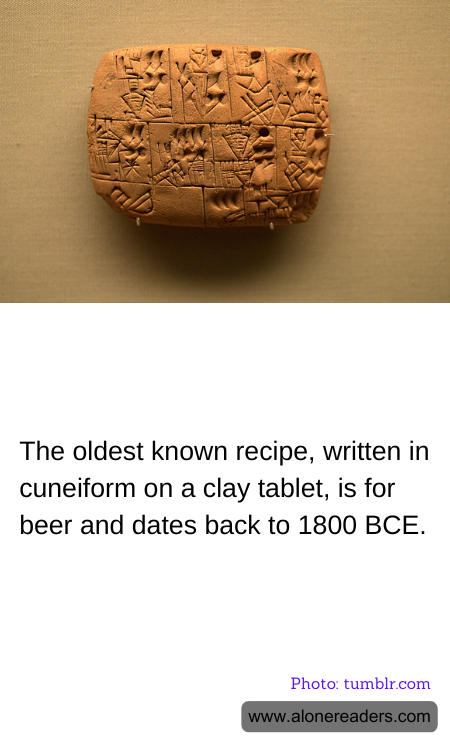
The oldest known recipe in the world, etched onto a small clay tablet, dates back to 1800 BCE. This ancient document is not for a lavish meal but rather for a common staple in the daily lives of the Mesopotamians—beer. Written in the cuneiform script of the Sumerians, one of the world’s earliest civilizations, this recipe underlines the significance of beer not only as a dietary staple but also as a cultural and religious element in ancient society.
The beer recipe is symbolic of the advanced level of both literary and culinary skill prevalent in Mesopotamia at that time. Cuneiform, one of the earliest known forms of written expression, was primarily used for recording important events, administrative tasks, and legal documents. That this script was also used to document a recipe indicates the central role that brewing and consuming beer played in Mesopotamian society. Unlike modern beer, which is typically clear and carbonated, the beer of ancient times was a thicker, porridge-like drink that was often consumed through straws to avoid the barley sediments.
The method outlined in the recipe involves baking barley bread, which was then fermented in water to produce beer. This multi-step process not only signifies the technological ingenuity of the era but also points to the communal aspect of beer production and consumption. Brewing was typically conducted by women and was considered both a domestic and ritualistic activity, often associated with goddesses of fertility and harvest.
The discovery of this beer recipe provides crucial insights into the dietary practices and social customs of ancient civilizations. Beer was not only enjoyed recreationally but was also used as an offering to gods and a medicinal remedy. Its nutritional properties likely played a crucial role in the spread of agriculture, as it provided essential calories and nutrients to the diets of early farmers.
Today, the legacy of this ancient craft continues as brewing remains a celebrated art form and cultural practice around the globe, bearing testament to its origins in the cradle of civilization. This ancient beverage, once a nourishing staple and a sacred offering, has transcended millennia to remain a universal symbol of camaraderie and celebration.
