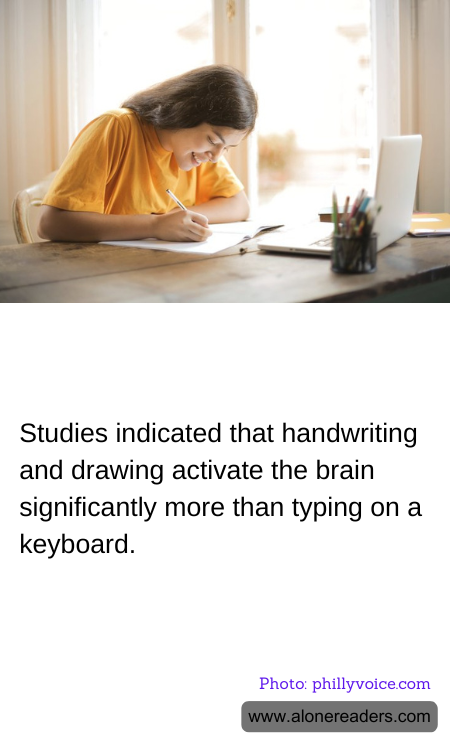
Recent studies have shown that engaging in handwriting and drawing activities stimulates brain function more profoundly than typing on a keyboard. The tactile and kinetic involvement required in manually manipulating a pen or pencil on paper enhances cognitive involvement and sensory-motor integration, offering a markedly different neurological experience from that of typing.
Handwriting activates the regions of the brain involved in thinking, language, and working memory—the hippocampus and parts of the cortex—more extensively than typing. This increased brain activity is thought to be linked to the unique motor actions involved in handwriting, where each stroke and character involves a series of coordinated movements. This manual dexterity complex is absent in typing, where each key press is uniform and less demanding in terms of fine motor skills.
Drawing, similar to handwriting, engages the brain in unique ways that digital devices cannot replicate. The process of visualizing, planning, and then manually creating the images on paper not only involves intricate hand-eye coordination but also enhances creativity and problem-solving skills. Engaging in such creative acts activates both the right and left hemispheres of the brain, fostering stronger neural connections and increased plasticity.
Moreover, drawing and handwriting have therapeutic benefits, helping to alleviate stress and improve focus and attention. They also improve memory recall and comprehension by forcing the brain to process information at a slower, more deliberate pace, which increases the likelihood of retention. Additionally, the physical act of writing and drawing can anchor information more deeply in the mind, as it involves more senses in the learning process.
On the contrary, while typing is undoubtedly efficient for capturing large amounts of text and suitable for the digital communication era, it uses fewer cognitive resources. Typing on a keyboard allows for rapid transcription of thoughts without the same level of depth in processing, potentially leading to lesser retention and engagement with the material.
The implications of these findings are substantial, especially in educational settings. Encouraging students to take notes by hand rather than typing them on laptops during lectures could help in enhancing their understanding and retention of the material. Similarly, incorporating drawing and other manual activities into learning could enhance cognitive development, creativity, and memory among learners.
In conclusion, despite the conveniences of technology, traditional methods of handwriting and drawing offer significant benefits for brain activation, learning, and cognitive health. Balancing the use of digital devices with handwriting and creative manual activities could be the key to a healthier, more engaged brain.
