More About This Card
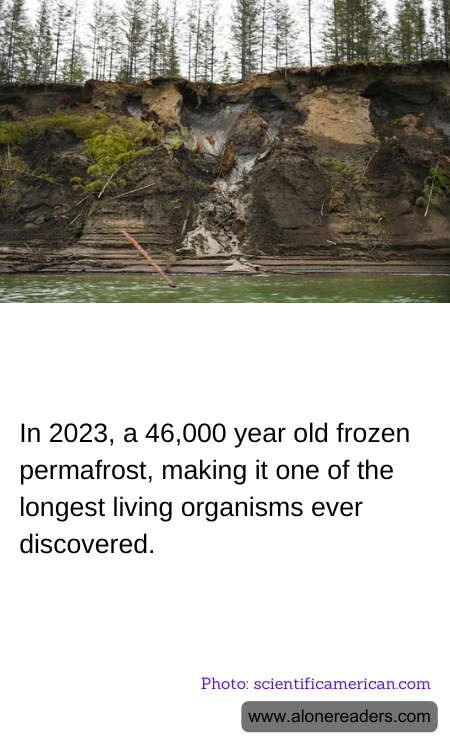
In a groundbreaking discovery, scientists unearthed a frozen permafrost sample in Siberia, dating back an astonishing 46,000 years. This remarkable finding stands out not just for its age but for what it represents—a complete and continuous organism, making it one of the longest-living organisms ever discovered. The implications of this discovery are profound, shedding light on the resilience and adaptation of life in one of the harshest environments on Earth.
The permafrost sample contains microbes that have remained frozen, yet viable, throughout millennia. These ancient organisms offer a unique window into the past, providing clues about the Earth's climatic conditions and the ecosystems that thrived during the Pleistocene epoch. This period was marked by repeated glaciations, known as the Ice Age, which profoundly shaped the planet's biodiversity and geological features.
Research into the sample has revealed that these microbes are capable of becoming metabolically active again once thawed. This finding is crucial as it demonstrates the potential of permafrost deposits to harbor life forms that can be revived after tens of thousands of years in cryptobiosis—a state of almost completely arrested metabolism. Scientists are now keen to understand the genetic adaptations that allowed these organisms to survive the extreme cold and desiccation of the permafrost.
The study of such ancient life forms not only enhances our understanding of past biodiversity but also has significant implications for modern science and medicine. For instance, enzymes derived from these microbes could have novel properties that are beneficial in low-temperature industrial processes or in the preservation of biological materials. Additionally, this research is vital for understanding the potential threats posed by the release of ancient microbes as global temperatures rise and permafrost layers melt.
Ultimately, the discovery of this frozen permafrost sample is a captivating reminder of the complexity and endurance of life. It challenges our perceptions of biological limits and underscores the need for comprehensive studies to explore the hidden biodiversity trapped in Earth’s frozen landscapes. As we continue to witness the impacts of climate change, insights gleaned from such ancient organisms will be indispensable in forecasting environmental shifts and possibly mitigating the associated risks.