More About This Card
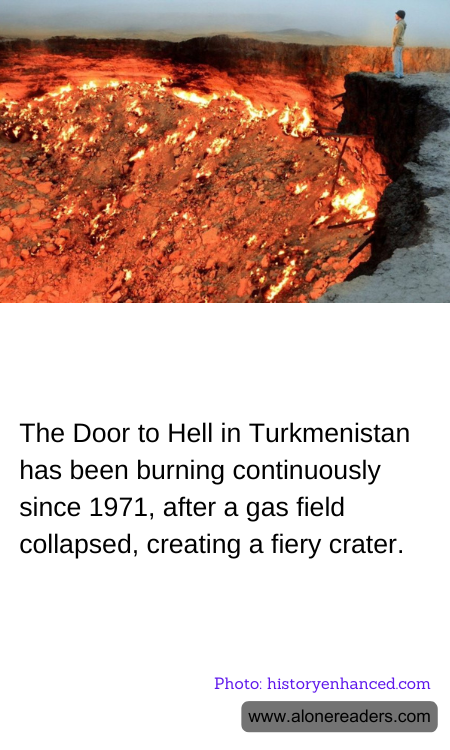
In the heart of Turkmenistan's Karakum Desert lies a mesmerizing yet daunting spectacle known as the Door to Hell. This fiery crater in Derweze has been burning continuously since 1971, casting an eerie glow that lights up the night sky. The origin of this phenomenon dates back to Soviet times, when geologists were drilling in the area in search of natural gas.
The story began when the ground beneath the drilling rig unexpectedly collapsed, creating a massive crater approximately 70 meters wide. To prevent the potential release of dangerous gases into the atmosphere, the decision was made to set the crater on fire, with expectations that the fire would consume all the leaking gas within a few weeks. However, contrary to expectations, the gas reserve was so abundant that the crater has continued to burn for over four decades.
Over the years, the Door to Hell has become one of Turkmenistan's most unusual and popular tourist attractions. Visitors from around the world travel to the remote desert location to witness the surreal scene of flames and boiling mud at night. The site also attracts scientists and researchers intrigued by its ecological impact and geological significance.
Despite its ominous nickname and fiery appearance, the crater has played a significant role in raising awareness about natural gas resources and environmental management. It is a stark, visual reminder of the earth's hidden power and the unforeseen consequences that can result from its exploitation. As such, the Door to Hell is not only a natural wonder but also a symbol of the complex relationship between human activities and nature.
Over time, there have been discussions about extinguishing the fire or harnessing the gas for energy purposes. However, the crater continues to burn, largely due to the technical challenges and costs involved. For now, it remains a unique beacon in the desert, a fiery spectacle that highlights both natural beauty and the daunting force of untamed energy.