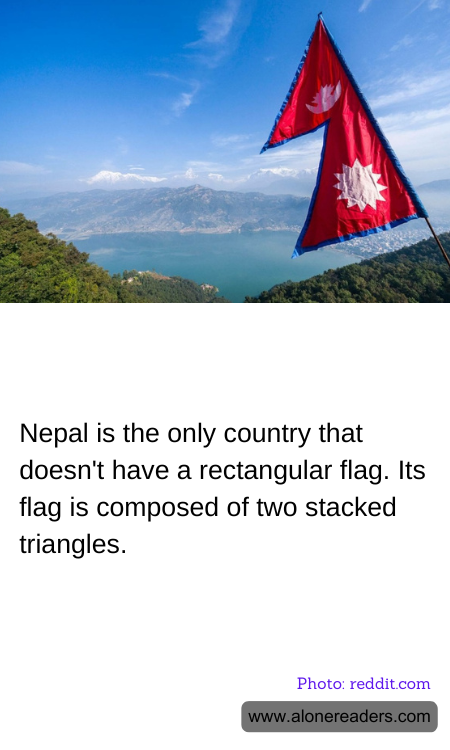
Nepal stands out in the world not only for its breathtaking landscapes and rich cultural heritage but also for having a unique national flag. Unlike every other country, whose flags are rectangular or square, Nepal's flag is made up of two stacked triangles. This distinctive design is not just a matter of aesthetics but is deeply rooted in the country's history and cultural values.
The two triangles of the Nepalese flag are said to represent the Himalayas, which are iconic to Nepal and symbolize the nation's resilience and steadfast spirit. Traditionally, the shape also denotes two major religions, Hinduism and Buddhism, which have coexisted in Nepal for centuries and are integral to its cultural fabric. Each corner of the triangles is thought to represent the four elements: earth, air, fire, and water, which are essential for life and reflective of Hindu and Buddhist beliefs.
The flag's colors are equally symbolic. The crimson red is reflective of the rhododendron, Nepal's national flower, and represents the bravery of the Nepalese people. The blue border signifies peace and harmony, a profound value for the populous that has experienced both the trials of internal conflicts and the unity of national pride.
At the center of the flag, set against the red background, are two celestial symbols: a stylized moon on the upper triangle and a sun on the lower triangle. These elements convey the hope that Nepal will have the same longevity as the sun and the moon, enduring through ages. They also reflect the cool of the mountains and the warmth of the lower lands.
Despite its non-rectangular form, the flag conforms to precise geometric specifications, and the method of creating the shape is laid down in Nepal's Constitution. This meticulousness underscores the importance of national identity and heritage, encapsulated in this unique ensign.
Nepal’s flag is not just a national symbol, but a representation of the country’s geography, a testament to its religious tolerance, and an emblem of the enduring spirit of its people. Its distinctive shape and deep meanings differentiate it from every other country’s flag, making it not only a point of pride for the Nepalese but a subject of fascination for others worldwide.
