More About This Card
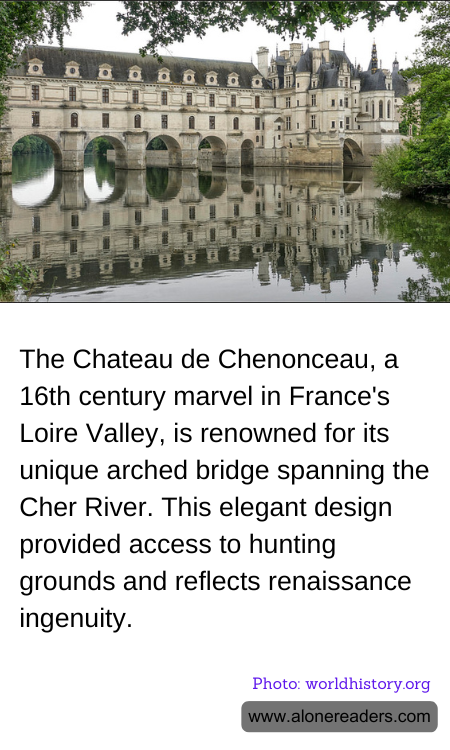
Nestled in the heart of France's Loire Valley, the Chateau de Chenonceau stands as a quintessential example of Renaissance architecture's elegance and ingenuity. Built in the 16th century, this stunning chateau distinguishes itself from others in the region with its remarkable arched bridge that gracefully spans the Cher River. Originally designed for the lavish entertainments of the French aristocracy, it also served practical purposes, such as providing access to the estate's extensive hunting grounds.
The Chateau de Chenonceau is often referred to as the "Ladies' Chateau," due to the influential women who shaped its destiny, from Catherine de' Medici to Diane de Poitiers. Their patronage ensured that the chateau was not only a residence but a place of culture and power. The architectural design of Chenonceau reflects this blend of beauty and function; its famous arched bridge, completed in 1559 under the direction of architect Philibert de l'Orme, is a masterpiece of Renaissance innovation. It was built with tuffeau stone, a regional limestone that is both light and durable, allowing for the spanning arches and the two-story gallery above to exist in perfect harmony with the natural flow of the river.
Beyond its architectural significance, the Chateau de Chenonceau is surrounded by meticulously maintained gardens that are as enchanting as the structure itself, designed by the women who lived there. These gardens enhance the chateau’s romantic and serene ambiance, making it a magnet for tourists and historians alike.
Chateau de Chenonceau not only demonstrates the aesthetic shifts during the Renaissance but also symbolizes the role of architecture in demonstrating power and prestige in French nobility. Today, it stands as one of the most visited and photographed chateaux in France, a timeless allure that draws countless visitors to admire its beauty and historical depth.