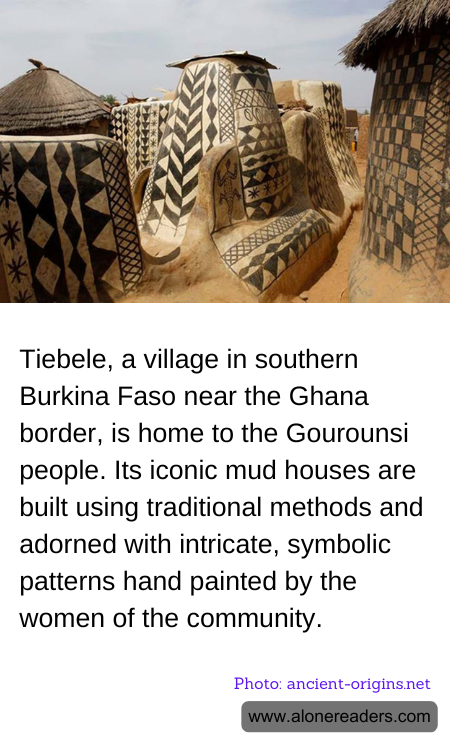
Nestled in the heart of southern Burkina Faso, close to the border with Ghana, lies the quaint village of Tiébélé, renowned for its culturally rich and visually striking mud brick architecture. This small settlement is home to the Gourounsi people, an ethnic group known for their deep-rooted traditions and artistic heritage. The most captivating aspect of Tiébélé is its traditional houses, which are not only architectural feats but also canvases for cultural expression.
The houses in Tiébélé are constructed using local materials, primarily mud and straw, which are readily available in the region. These materials are ingeniously utilized to form the walls and roofs of the structures, making them well-suited to the harsh, dry climate of Burkina Faso. The design of these mud houses is uniquely adapted to their environment, featuring thick walls that insulate the interiors from both heat and cold, and small windows that minimize the amount of sunlight entering the house, keeping the rooms cool during hot days.
What truly sets the architecture of Tiébélé apart are the elaborate and symbolic decorations that adorn the exteriors of these mud houses. These decorations are meticulously hand-painted by the women of the Gourounsi community, a task that is passed down through generations as both an art form and a cultural duty. The paintings often feature complex geometric patterns and symbols that reflect the community’s beliefs, values, and stories. The colors used are typically natural pigments, which blend harmoniously with the landscape.
The process of creating these vibrant murals begins with the application of colored mud and chalk, which forms the base of the artwork. Once this layer has dried, the women use brushes made from bird feathers and twigs to paint intricate patterns onto the walls. Every pattern has a meaning, often connected to folklore, history, and the daily lives of the people. For instance, some patterns are protective symbols intended to ward off evil spirits or bad luck, while others record historical events or aspects of Gourounsi culture.
Visitors to Tiébélé can witness not only the visual beauty of these homes but also gain insight into the community’s way of life, which revolves around extended family and collective labor. The construction and maintenance of homes are community efforts, and the decorating process serves as a social activity that strengthens bonds among the villagers.
Through their art and architecture, the people of Tiébélé have managed to preserve their culture and share it with the world, despite the modernizing pressures faced by many traditional societies. The village not only stands as a testament to the cultural heritage of the Gourounsi people but also as a source of inspiration, reflecting the sustainable use of local materials and community-driven development in architecture. For those fortunate enough to visit, Tiébélé offers a unique glimpse into the soul of Africa, where tradition and beauty are intricately interwoven into the fabric of daily life.
