More About This Card
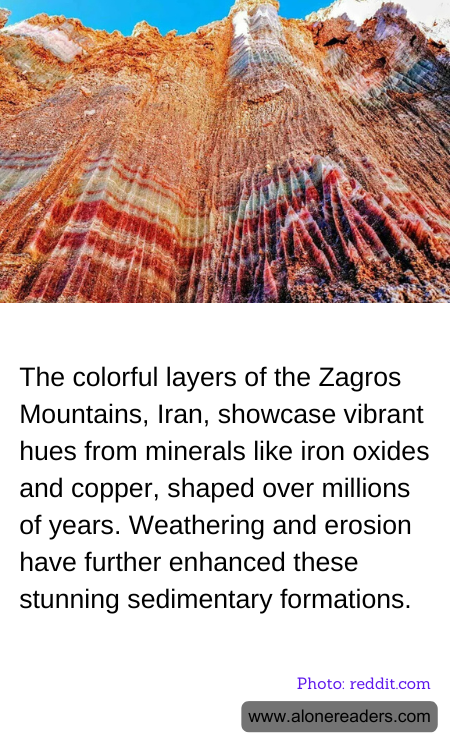
The Zagros Mountains in Iran are not only one of the most significant geological features of the region but also one of the most beautiful. Spanning from northwestern Iran and stretching to the Persian Gulf, these mountains are a majestic spectacle, with their colorful stratifications standing as a testament to the natural history of the Earth. The layers upon layers of rock are like pages in a history book, each one recording the geological events of millions of years.
What makes the Zagros Mountains particularly stunning are the vibrant colors visible in the rock formations. These colors are primarily due to minerals such as iron oxides and copper. Iron oxides manifest in hues of red, yellow, and orange, giving the mountains their fiery appearance. Copper contributes greens and blues, adding to the visual spectacle. This vivid palette is highlighted further by the sunlight which often douses the mountains in golden hues at sunrise and sunset, creating breathtaking scenes.
Added to the intrinsic beauty of these colors, the process of weathering and erosion plays a critical role in sculpting the appearance of the Zagros Mountains. Over time, wind, water, and atmospheric conditions have eroded the rocks, enhancing the definition of the layers and exaggerating the mix of colors. The erosion process has also resulted in the formation of jagged peaks, deep valleys, and sharp ridges, adding dramatic contrasts to the already picturesque landscape.
This continuous natural sculpting makes the Zagros not just a mountain range, but also a dynamic canvas of nature's artistry. The intricate layering and vast diversity of mineral compositions make these mountains a point of interest not only for geologists but also for nature enthusiasts and photographers seeking the raw beauty of untouched natural environments.
Moreover, these mountains aren’t just aesthetically pleasing; they are also ecologically significant. They host a variety of ecosystems, contributing to the biodiversity of the region which includes numerous species of plants, animals, and birds, some of which are endemic to this area. The geological history and ecological value together weave a complex tapestry that emphasizes the importance of preservation and respect for natural landscapes, especially in a time when climate change poses significant threats to such regions.
The Zagros Mountains, therefore, stand not only as a symbol of natural beauty and geological wonder but also as a reminder of the delicate balance we share with our environment. These mountains challenge us to appreciate, study, and ultimately protect the splendor of the Earth’s geological and ecological diversity.