More About This Card
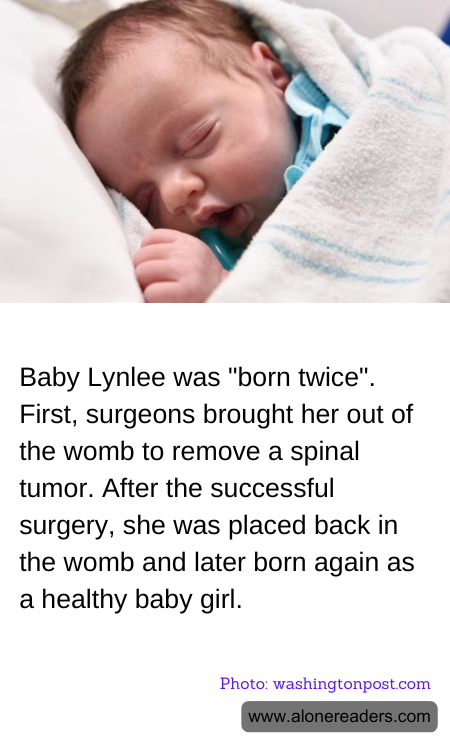
In an extraordinary medical case, baby Lynlee Hope was given a rare chance at life, undergoing what could be described as being "born twice." Initially, during a routine prenatal checkup, her mother's doctors discovered that Lynlee had a large tumor known as a sacrococcygeal teratoma. This type of tumor develops at the base of the tailbone and is more common in female infants. Concerns grew as the tumor was jeopardizing Lynlee’s chances of survival; it was diverting blood away from her body, potentially leading to heart failure.
The medical team at Texas Children's Hospital decided on a daring and innovative procedure. At 23 weeks, Lynlee was partially delivered through a cesarean section. Although still connected to her mother via the umbilical cord, which continued to provide essential oxygen and nutrients, the exposed lower half of her body allowed surgeons to operate and successfully remove the life-threatening tumor. After the tumor was excised, Lynlee was carefully placed back inside her mother's womb and the incision was closed.
This remarkable surgery was just the beginning of Lynlee's journey. She continued to grow and develop inside her mother's womb for another 12 weeks. Finally, Lynlee was "born again" at 36 weeks, weighting 5 pounds and 5 ounces. She did require further surgery to remove the remaining parts of the tumor and to repair her tailbone area, yet these procedures were small in comparison to her initial life-saving surgery.
The successful double birth was not only a testament to the surgical and medical teams' expertise but also highlighted incredible advances in prenatal surgery. Techniques and interventions that were once considered impossible are now giving hope to many families facing dire prenatal diagnoses. Lynlee's case stands as a beacon of medical innovation, showing the incredible possibilities the future of prenatal care might hold for the treatment of similar congenital conditions.