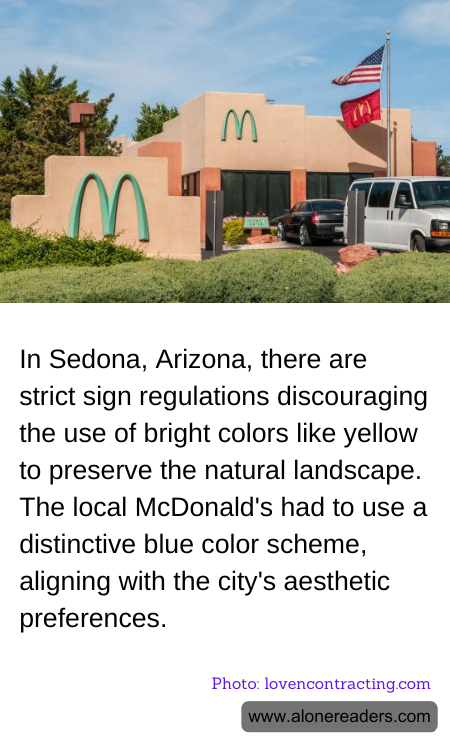
In Sedona, Arizona, a town known for its dazzling red rock landscapes and vibrant art scene, local regulations take a unique approach to urban planning and advertising. Most notably, the city enforces strict sign regulations that limit the use of bright colors, which are believed to distract from the natural beauty of the area. These rules are in place to ensure that any signage blends harmoniously with Sedona's scenic backdrop, helping to maintain its serene and natural environment.
An illustrative example of these regulations is evident in the case of the local McDonald's restaurant. Typically, McDonald's franchises around the world are recognized by their famous golden arches. However, in Sedona, the multinational chain had to modify its iconic logo to fit the local aesthetic requirements. Instead of the bright yellow used globally, the Sedona McDonald's features turquoise arches. This adaptation makes the Sedona McDonald's one of the very few in the world to deviate from the brand's standard color scheme.
The choice of turquoise for the McDonald's arches was not arbitrary. This color not only aligns more closely with the surrounding desert palette but also holds cultural significance in the region, reflecting the Southwestern art and jewelry that incorporates the blue-green hues common in turquoise stones. This adjustment by a global brand underscores the impact of local regulations and the commitment to preserving the distinctive visual charm of Sedona.
Sedona's initiative to regulate signage colors demonstrates a broader commitment to environmental integration and aesthetic preservation. These efforts mirror the community's deep engagement with its landscapes and cultural heritage, prioritizing the natural over the commercial, and local character over global uniformity. In doing so, Sedona sets a precedent for how towns can maintain their unique identity in the face of globalization, ensuring that even as they grow and welcome international brands, they retain what makes them special.
