More About This Card
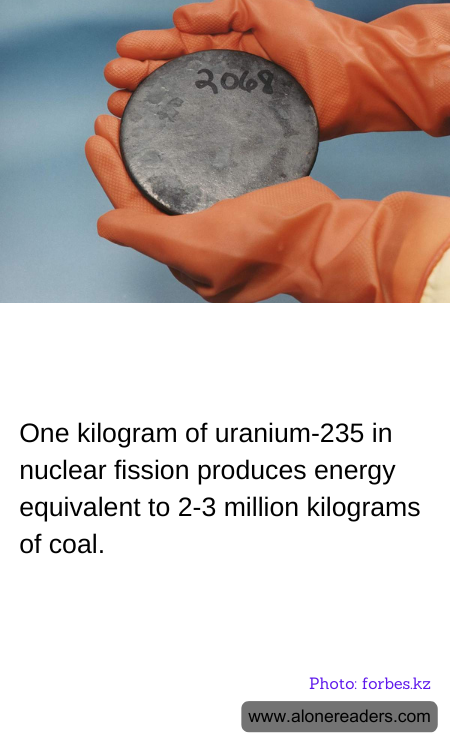
Nuclear energy, derived from the fission of uranium-235, stands out as one of the most potent sources of power known to mankind, primarily because of the immense amount of energy it can produce from a relatively small amount of fuel. A single kilogram of uranium-235, when subjected to nuclear fission, can release an amount of energy equivalent to what 2-3 million kilograms of coal would produce through combustion. This staggering difference not only highlights the efficiency of nuclear power but also its potential in meeting large-scale energy demands.
The process of nuclear fission involves the splitting of the uranium-235 nucleus into smaller nuclei when bombarded with a neutron, releasing a significant amount of heat and gamma radiation. This heat is then used to produce steam, which drives turbines connected to generators, thereby producing electricity. The efficiency of this process is due to the extremely high energy density of uranium-235. In essence, nuclear fission extracts energy by tapping into the strong nuclear forces within the uranium nucleus, whereas burning coal releases energy only from chemical reactions, which involve much weaker forces.
The implications of such energy efficiency are profound, especially in the context of global energy consumption and environmental impact. Using uranium-235 for energy generation significantly reduces the quantity of fuel required for producing electricity compared to traditional fossil fuels like coal. This not only conserves natural resources but also leads to lesser environmental degradation and reduced carbon emissions, assuming proper management of nuclear waste, which itself poses significant challenges and risks.
However, despite its efficiency and the benefits associated with reduced carbon emissions, the use of nuclear power is fraught with concerns such as radioactive waste, risks of nuclear accidents (exemplified by the Chernobyl and Fukushima events), and issues related to the decommissioning of nuclear plants. These challenges necessitate highly regulated, technologically advanced, and secure operations to mitigate risks associated with nuclear energy production.
Moreover, while uranium-235 is abundant enough to meet current demands, it is still a non-renewable resource, and the long-term viability of nuclear fission as an energy solution depends on sustainable practices and the successful development of alternative renewable energy sources. The future of energy production, therefore, lies not only in harnessing the power of materials like uranium-235 but also in integrating a variety of solutions including renewable resources like solar, wind, and hydroelectric power to achieve a balanced, sustainable, and secure energy portfolio for the planet.