More About This Card
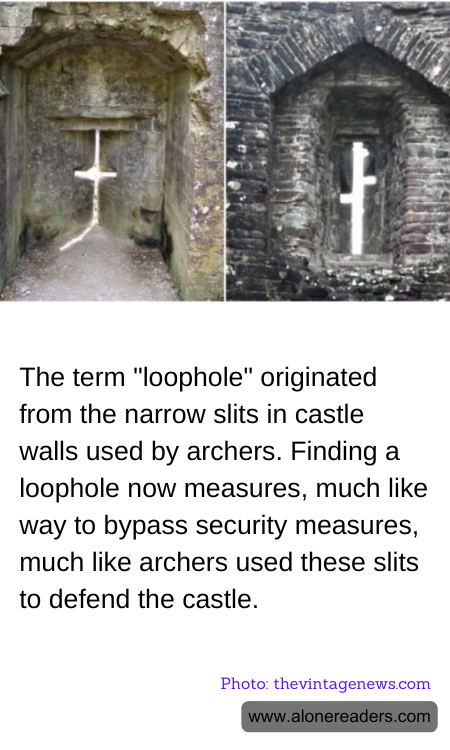
Loopholes have a fascinating etymological history, stretching back to medieval times when they referred to narrow vertical slits in castle walls, through which defenders could shoot arrows at attackers while remaining largely protected. These slits were strategically essential, providing a means of defence without exposing the archers to undue risk. Over the centuries, the term has evolved and taken on a broader, metaphorical sense in modern language.
Today, "finding a loophole" implies identifying a small or obscure detail in a system, usually a set of rules or laws, that allows someone to circumvent or avoid the intent of the system while still staying within the bounds of legality. Much like medieval archers who exploited the small openings in castle walls to protect themselves and gain an advantage over their adversaries, modern-day usage of loopholes typically involves exploiting gaps or ambiguities in regulatory or legal frameworks.
The evolution of the term 'loophole' reflects a shift from a physical to a figurative interpretation, illustratively bridging tactical ingenuity in both a literal and metaphorical sense. In legal and financial contexts, loopholes can often be exploited for personal gain, and their discovery and use can lead to significant changes in laws and regulations to close them.
For example, tax loopholes are mechanisms that allow individuals or corporations to reduce their tax liabilities without directly violating the law. These can arise due to the complex nature of tax codes, where not every contingency can be predicted. As such, governments frequently review and amend laws to address these discrepancies, reflecting an ongoing game of cat and mouse between lawmakers and those who seek to gain from finding and exploiting these loopholes.
The shift from a literal gap in a physical barrier to a metaphorical gap in regulatory systems illustrates the adaptability of language, as well as the ways human ingenuity manifests across different domains—both in defending castles and in navigating the complex landscapes of modern laws and regulations. The enduring concept of a loophole, much like those narrow slits in ancient castles, continues to represent a means of defense and an opportunity for strategic advantage, demonstrating how historical concepts can retain relevance even as they undergo significant transformation.