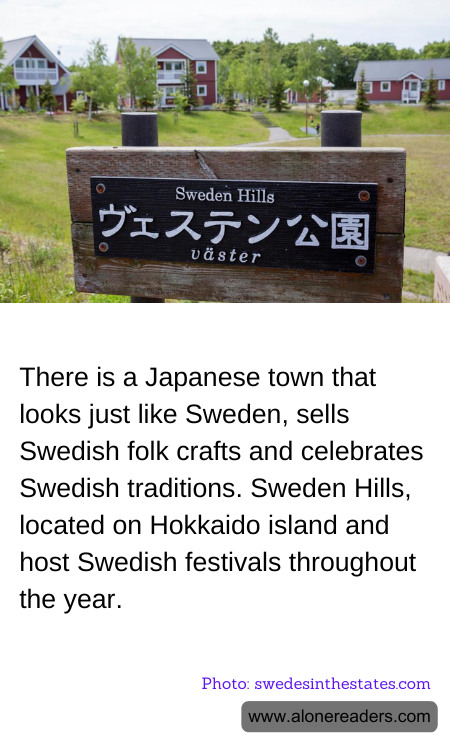
Nestled in the scenic countryside of Hokkaido, Japan's northernmost island, lies an unexpected slice of Scandinavia: Sweden Hills. This unique town is a remarkable replica of a traditional Swedish village, complete with picturesque red and yellow wooden houses that seem to have been lifted straight from the Swedish countryside. The fascination with Swedish culture in this Japanese town began in the early 1980s when a Swedish ambassador visited the area and remarked on its striking resemblance to his homeland, both in climate and natural beauty.
Inspired by this comparison, Sweden Hills was meticulously designed to mirror the charming architectural style and community spirit of a typical Swedish village. The streets are lined with the iconic Falu red houses, a color deeply ingrained in Swedish architecture, named after the copper mine in Falun, Sweden, which produced the pigment. These homes, surrounded by flower gardens and green spaces, immediately transport visitors and residents alike to a quaint European enclave.
Beyond its architectural mimicry, Sweden Hills embraces Swedish culture in deeper, more active ways. The town is a hub for Swedish traditions, hosting numerous festivals throughout the year that celebrate various aspects of Swedish culture. For instance, the Midsummer Festival is a highlight, attracting not only locals but also tourists who are eager to partake in this traditionally joyful Swedish occasion. Visitors can see the maypole (majstång) being raised, and participate in dancing, singing, and other activities that make the Swedish Midsummer a unique and vibrant celebration.
Moreover, Sweden Hills is passionate about introducing Swedish culinary traditions to Japan. The local cafe offers an array of Swedish dishes and snacks, from the well-loved meatballs and lingonberries to the traditional fika — a coffee break that typically involves coffee and pastries, emphasizing the Swedish social tradition of taking a pause to enjoy the company of others.
The town also fosters cultural exchange through its retail offerings, with shops selling Swedish folk crafts, ranging from textiles to ceramics, all of which embody the meticulous attention to detail and the love for nature that Swedish crafts are known for. This not only helps to educate visitors about Swedish culture but also adds to the town's authentic Scandinavian atmosphere.
Sweden Hills stands out as a testament to the power of cultural appreciation and exchange. It provides a beautiful, immersive experience that illustrates how a community can honor another country’s heritage while fostering understanding and unity. This Japanese town is more than just a curiosity; it's a bridge between the East and the West, celebrating the rich tapestry of global cultures.
