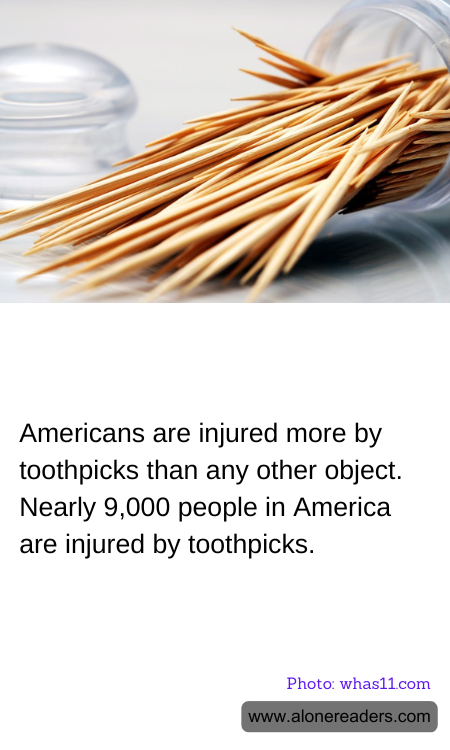
While they may seem innocuous, toothpicks are responsible for an unexpected number of injuries in the United States annually. Surprisingly, nearly 9,000 Americans find themselves harmed by these small, pointed wooden or plastic sticks every year. Such injuries can range from minor annoyances to more severe health issues, including infections and even life-threatening conditions. Toothpicks are often used for dental hygiene or as tools in various food preparations, making them common in many settings, from kitchens to restaurants to personal care kits.
The injuries typically occur in a few common scenarios. One of the most frequent incidents happens when individuals accidentally swallow or choke on toothpicks, which can go unnoticed when left in sandwiches or burgers. Ingested toothpicks can lead to severe internal injuries, piercing the throat or intestines. Another common issue arises when people, often absentmindedly, put toothpicks in their mouths, only to experience an unfortunate slip leading to cuts, punctures, or more serious oral injuries.
Despite their utility, the risks associated with toothpick use call for greater public awareness and caution. For instance, ensuring that toothpicks are clearly visible when used in food servings, or avoiding walking around or talking with a toothpick in the mouth can mitigate some of the common risks. Alternatives to traditional toothpicks, like dental floss or picks designed with safety features, are also worth considering. Additionally, educating the public, particularly in food service, about the potential dangers and safe handling of toothpicks, can help reduce the incidence of these injuries.
Given their widespread use and the potential severity of the injuries they can inflict, toothpicks deserve more attention than they typically receive. Simple measures and increased caution can significantly decrease the number of toothpick-related incidents, making them a safer choice for everyday use.
