More About This Card
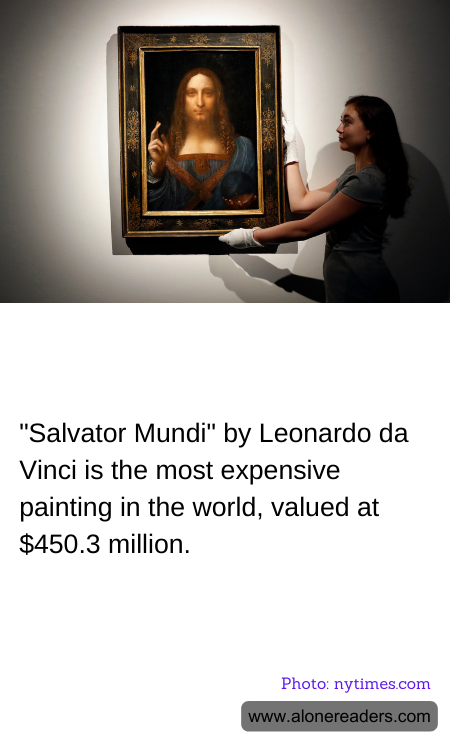
"Salvator Mundi," a painting attributed to the iconic Renaissance artist Leonardo da Vinci, holds the record as the most expensive painting ever sold at auction. The artwork, which depicts Jesus Christ as the Savior of the World, was sold for a staggering $450.3 million in November 2017 at Christie's in New York City. This sale shattered all previous records and highlighted the extreme rarity and cultural value of works attributed to da Vinci.
The history of "Salvator Mundi" is as dramatic and mysterious as its valuation. The painting's origin dates back to around 1500, but it was lost to the art world until it resurfaced in poor condition at an American estate sale in 2005. Initially underestimated, it was later restored and authenticated as a genuine work by Leonardo. This authentication, though accepted by many experts, has also been a subject of intense debate among art historians and critics, with some questioning the extent of da Vinci's hand in the artwork.
What makes "Salvator Mundi" particularly fascinating is not just its association with da Vinci, but also its striking composition and the use of light and shadow, which is characteristic of the artist's technique. Christ is depicted with one hand raised in a blessing and the other holding a crystal orb, symbolizing the earth. The ethereal representation and the detail in the curls of Christ's hair and the drapery of his robe are indicative of the careful skill that aligns with Leonardo’s known works.
The astronomical sale price of "Salvator Mundi" reflects its perceived value as a piece of cultural and historical significance rather than just a visual art piece. The purchase thrust the painting into the global spotlight, sparking conversations about the art market's dynamics and the factors driving the valuation of artworks. In addition to its disputed authenticity and illustrious provenance, the painting serves as a stark symbol of the rarefied world of art collecting, where the convergence of history, rarity, and market forces can result in astonishing figures.
Currently, its whereabouts are somewhat uncertain, adding another layer of mystery to its story. Reported to be in the possession of a private collector in Saudi Arabia, "Salvator Mundi" continues to be a topic of fascination and speculation, representing not just a lost piece of art history but also the ever-evolving narrative of art in the modern age.