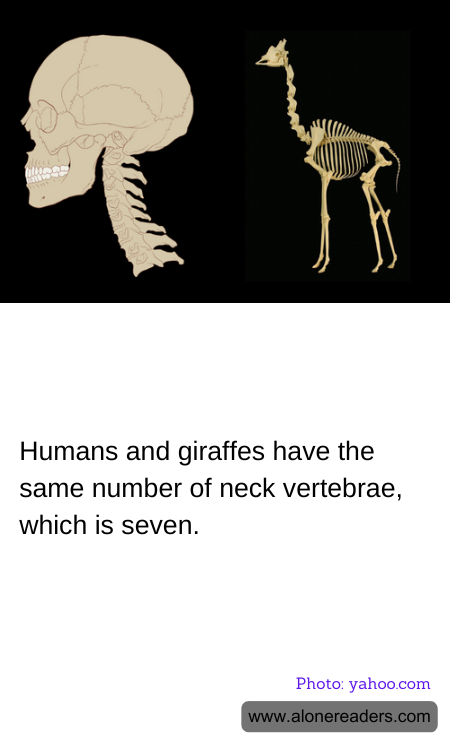
Despite the striking difference in neck length, humans and giraffes both share a surprising anatomical similarity: each possesses exactly seven vertebrae in their necks. This shared characteristic highlights a fascinating aspect of vertebrate evolution. The cervical vertebrae, as they are scientifically referred to, are a classic example of how evolutionary processes can work within a fixed structural framework to generate a vast array of forms and functions.
In giraffes, each cervical vertebra is elongated, allowing for their famously long necks, which can reach up to six feet in length. This adaptation provides various survival advantages, primarily enabling giraffes to browse leaves high above many other herbivores' reach in the African savannas. The elongation of these bones did not come at the cost of additional vertebrae but rather through the modification of existing structures.
Humans, on the other hand, have much shorter cervical vertebrae, reflecting our evolutionary path that prioritizes range of motion over reach. This range is crucial for complex movements and rotations of the head, important in our interactions, communication, and how we engage with our environment. However, like giraffes, the fundamental blueprint—seven vertebrae—remains consistent.
This evolutionary consistency can be traced back to a common ancestor shared by all mammals, the basic neck vertebral blueprint likely optimized early in mammalian evolution for a balance of structural support, flexibility, and locomotive or feeding efficiency. It's a striking demonstration of how natural selection shapes divergent forms from the same starting materials. Each species adapts these materials to its ecological needs and niches, yet the underlying structural design offers a unifying link across disparate life forms.
Understanding such parallels not only provides insights into the broad themes of evolution and adaptation but also underscores the interconnectedness of the life on our planet. The next time we look at a giraffe, it’s worth remembering that its towering presence involves a variation on a theme that recurs in our own anatomy—an elegant example of nature’s resourcefulness and the wonders of evolutionary biology.
