More About This Card
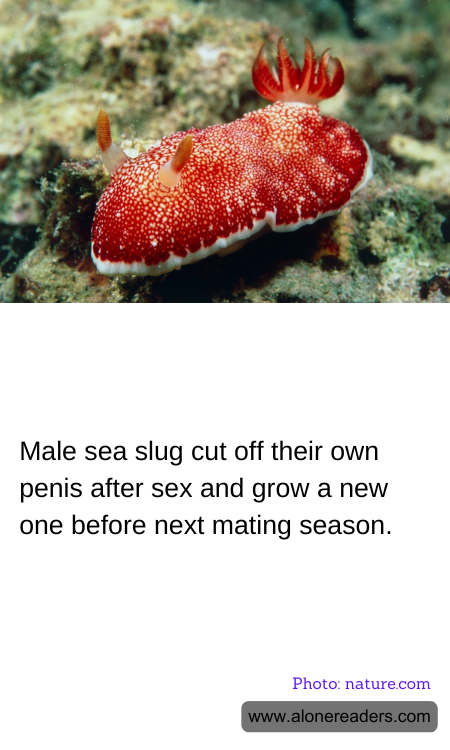
Sea slugs, specifically from the species Chromodoris reticulata, exhibit one of the most bizarre reproductive behaviors in the animal kingdom. After mating, these hermaphroditic creatures, which possess both male and female reproductive organs, literally sever their own penises. Despite what might seem like a drastic measure, this act is a calculated strategy within their lifecycle and reproductive system.
The process happens because the Chromodoris reticulata's penis accumulates a lot of sperm from other slugs in a corkscrew-shaped structure during the coupling, which can last up to several minutes. Once mating is completed, the penis, which can become clogged with the sperm from several different partners, is of no further use in its current state. By discarding it, the sea slug not only rids itself of the redundant organ but also decreases the risk of reproductive complications such as blockages or infections.
Remarkably, these sea slugs are not condemned to a life of celibacy after losing their penis because they have the astonishing ability to regenerate it. This regeneration process takes about 24 hours, a quick turnaround by any standard. The regenerated penis is fully functional and capable of mating again, ensuring that the slug can continue to reproduce throughout its lifecycle.
This adaptation likely evolved to maximize reproductive success. By being able to mate with numerous partners in quick succession during the mating season, the sea slug significantly increases its chances of passing on its genes. The rapid regeneration of the penis is a critical trait that supports this reproductive strategy.
Beyond its shocking nature, this behavior underscores the complexity and variation of reproductive strategies in the natural world. It also highlights the incredible capacity for regeneration in some species, a subject of keen interest not only for biologists but also for medical research, offering potential insights into human medical therapies and tissue regeneration.
In summary, the reproductive behavior of the Chromodoris reticulata sea slug is not only a curiosity but also a compelling example of how organisms can evolve highly specialized and seemingly extreme biological processes to adapt to their environmental and reproductive challenges.