More About This Card
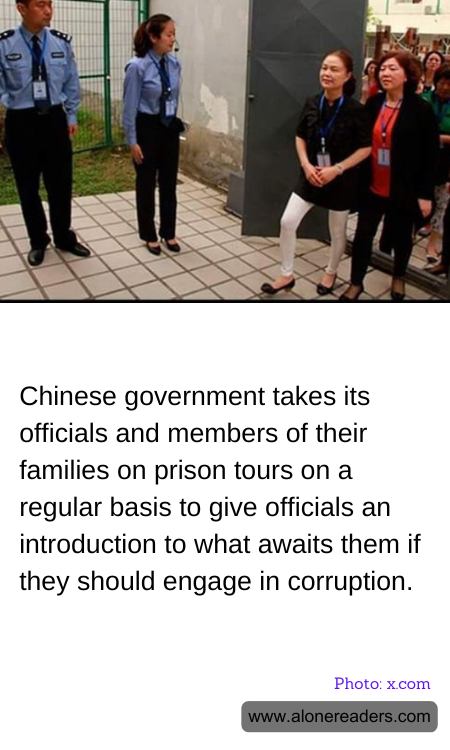
In an innovative and somewhat unorthodox move to tackle corruption, the Chinese government has taken the strategy of arranging prison tours for its officials and their families. This initiative aims to serve as a stark reminder of the consequences awaiting those who engage in corrupt practices. By directly exposing officials to the grim reality of prison life, the government seeks to instill a deep sense of accountability and deter any potential misconduct.
The tours are thoroughly structured, guiding participants through the sparse living conditions, strict schedules, and overall harsh environments that characterize life behind bars. Family members witness firsthand where their loved ones could end up if they stray from the path of integrity. This strategy exploits the emotional impact of such an experience, enhancing its effectiveness as a deterrent compared to more conventional methods of anti-corruption education.
Despite the controversial nature of this approach, it is an extension of China's robust anti-corruption campaign. Over the past decade, the government has rigorously pursued corrupt officials at all levels, resulting in thousands of prosecutions. President Xi Jinping, who took office in 2013, has positioned the fight against corruption as a cornerstone of his administration, vowing to catch both "tigers and flies," a metaphor for targeting both high-level and low-level corrupt officials.
Critics argue that such tours could have a traumatizing effect and question the ethics of involving family members, including children, in these experiences. They also raise concerns about the effectiveness of fear-based tactics in fostering genuine ethical behavior. Proponents, however, suggest that such direct and visceral methods are necessary in cultures where corruption has deep historical roots and where other methods have proven ineffective.
Overall, the prison tours are a vivid example of China's aggressive measures to root out corruption. This method embodies a bold approach to preventive education that underscores the Chinese government's commitment to governance reform and transparency. It remains to be seen how this strategy will impact the overall culture of corruption and whether it will foster a true sense of ethical governance among China's officials. As with many such initiatives, the blend of ethical considerations and effectiveness in enforcement continues to fuel a lively debate on the global stage.