More About This Card
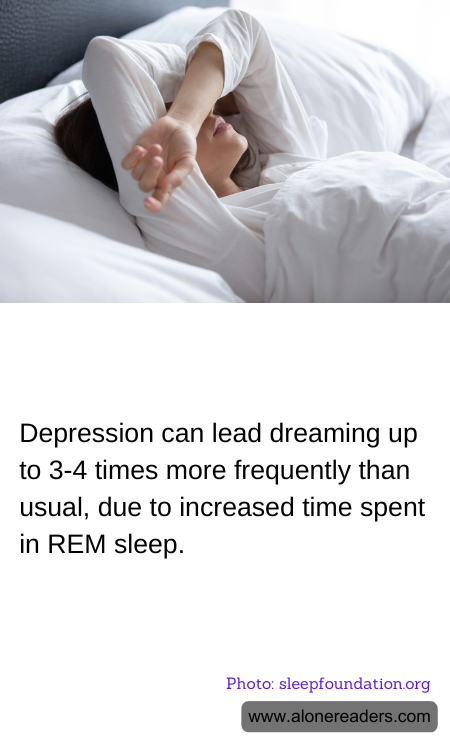
Depression is a complex mental health disorder that affects various aspects of life, including sleep patterns. One of the intriguing aspects of how depression affects sleep is its impact on the dream cycle, particularly the frequency of dreaming. Research has shown that people suffering from depression may experience dreaming three to four times more frequently than they would under normal psychological conditions. This phenomenon largely results from an increased amount of time spent in Rapid Eye Movement (REM) sleep, the sleep stage in which most dreaming occurs.
Normally, REM sleep comprises about 20-25% of an adult's sleep cycle. However, individuals with depression often exhibit an imbalance in sleep architecture, including prolonged periods of REM sleep and shortened durations of the deeper, restorative stages of non-REM sleep. This altered sleep pattern not only increases the frequency of dreams but can also affect the emotional intensity and content of dreams.
Dreams during REM sleep in depressed individuals are often characterized by themes of sadness, anger, or fear, and these intense dreams can sometimes exacerbate feelings of hopelessness and sadness upon waking. Moreover, the quality of REM sleep is pivotal in emotional regulation and memory consolidation. In the context of depression, the increased REM sleep could be the body's attempt to process and reconcile emotional disturbances experienced during wakefulness.
Interestingly, some treatments for depression can also influence the patterns of REM sleep. For instance, certain antidepressants suppress REM sleep, which might contribute to their therapeutic effects by reducing the intensity and frequency of distressing dreams. Nevertheless, the relationship between depression, dreaming, and REM sleep is not yet fully understood, and it varies widely among individuals.
Understanding the intricate link between REM sleep and depression is crucial for developing effective treatment strategies. Improving sleep architecture and finding a balance in sleep stages might serve as an essential component of managing depression. Sleep-focused interventions, including psychotherapy and pharmacotherapy, are being explored for their potential to alleviate both depressive symptoms and associated sleep abnormalities.
In conclusion, the increase in dream frequency linked to depression highlights the profound yet complex interaction between our psychological states and sleep cycles. A deeper insight into this relationship is essential not only for advancing our understanding of depression but also for enhancing the therapeutic approaches used to mitigate its symptoms. As research continues to unravel the mysteries of sleep and its impact on mental health, it is becoming increasingly clear that a good night's sleep is more intricately connected to our emotional well-being than previously recognized.