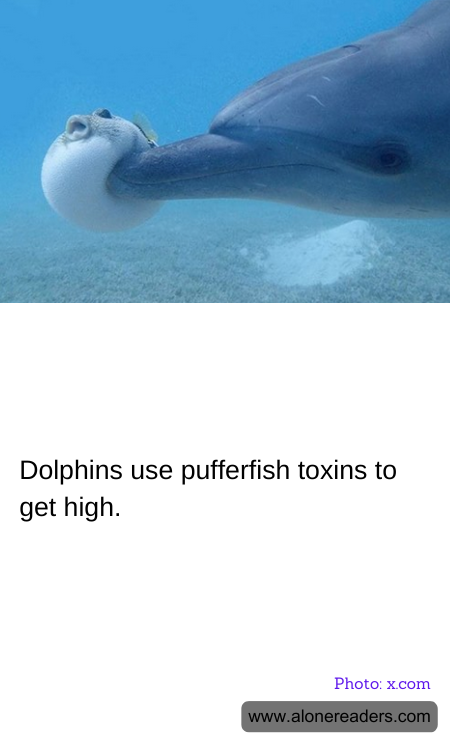
In the vast, blue expanse of the ocean, dolphins, known for their intelligence and gregarious nature, have been observed engaging in a peculiar behavior that intrigues scientists and animal behaviorists alike. Reports and research indicate that dolphins may intentionally seek out pufferfish, a species known for its potent neurotoxin, to experience a state similar to intoxication. This intriguing interaction highlights a complex aspect of dolphin behavior, blending the lines between instinctual survival and recreational activities.
Pufferfish release a toxin called tetrodotoxin, which is deadly in high doses but can have narcotic effects at lower concentrations. According to observations and studies, dolphins gently agitate the pufferfish, causing them to release a small amount of toxin as a defense mechanism. Rather than consuming the fish, dolphins appear to pass the pufferfish around among group members, each taking turns mouthing the toxin-laced fish. Subsequent behaviors suggest a trance-like state; dolphins are seen floating at the surface, seemingly mesmerized or entranced by their enhanced sensory experience.
While it might be tempting to characterize this behavior as purely recreational, akin to human use of intoxicants, researchers urge caution in such anthropomorphic interpretations. The scientific community continues to debate the intention and awareness behind this behavior. Some argue it may be exploratory or social bonding in nature, rather than a clear-cut quest for euphoria. This phenomenon could also be a by-product of curious young dolphins mimicking adults or a form of teaching survival techniques when encountering dangerous sea creatures.
Despite the enchanting allure of labeling dolphins as seekers of marine-induced highs, it is essential to consider this behavior within the broader context of animal interaction with natural compounds. Across various species, interactions with potentially intoxicating substances occur, like elephants with marula fruit or big cats with catnip. These interactions underscore a broader field of research in zoopharmacognosy, which explores how animals use the natural environment to manage their health and well-being.
In sum, while it's captivating to think of dolphins as recreational users of pufferfish toxins, the reality is likely more complex, involving elements of social learning, species interaction, and the innate curiosity that characterizes much of dolphin life. As research continues, each piece of evidence adds depth to our understanding of these remarkable marine creatures, revealing not just how they survive, but how they explore and possibly even enjoy their underwater world.
