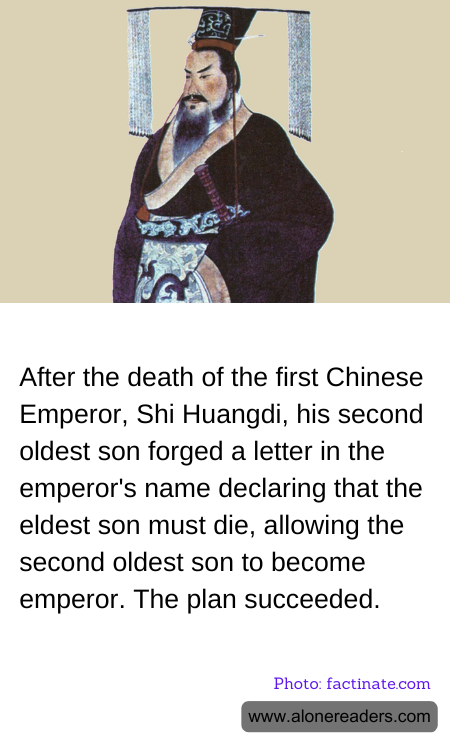
The death of Shi Huangdi, the first Chinese Emperor, marked a significant and tumultuous period in Chinese history, particularly in the transition of power that followed. Shi Huangdi, known for his monumental achievements such as the unification of China and initiating the construction of the Great Wall of China, died in 210 BC. His death sparked a fierce succession struggle that is as dramatic as any tale of royal intrigue.
Shi Huangdi's second oldest son, Huhai, was central to this power struggle. In a cunning move, Huhai and a close advisor, Zhao Gao, forged a letter claiming to be from the dying emperor. This letter ordered the death of Fusu, Shi Huangdi's eldest son and the original heir apparent. Fusu, who was highly respected and considered a capable leader, represented a significant threat to Huhai’s ambitions. The letter alleged that Fusu had planned a rebellion, leading to his ordered suicide—a common method in ancient China for dealing with disgraced nobles and preserving their family’s honor.
Once Fusu was out of the picture, Huhai ascended to the throne unchallenged, taking the regnal name Qin Er Shi. His rule, however, was markedly different and less effective than his father's. Lacking the authority and respect commanded by Shi Huangdi, Qin Er Shi faced numerous difficulties in governing. His reign saw the rapid decline of the administrative structure and the eventual weakening of the Qin Dynasty. The manipulation and betrayal that secured his rise to power also sowed the seeds for the dynasty’s downfall.
Zhao Gao, who had been pivotal in Huhai’s ascension, continued to wield significant influence, manipulating the young emperor and contributing further to the instability of the regime. The empire that Shi Huangdi had worked so hard to consolidate began to crumble amid corruption, assassinations, and revolts. Just three years after coming to power, Qin Er Shi's reign ended, and the dynasty fell shortly afterward, illustrating the precarious nature of power obtained through deceit and treachery.
This dark episode in the early imperial history of China is a poignant reminder of how dynastic politics often played out behind the palatial walls, with trust and loyalty frequently sacrificed for power. The story of Huhai's rise to power is not just a narrative of individual ambition but also reflects the broader vulnerabilities and challenges within the dynastic rule, setting the stage for the cycles of rise and fall that would characterize much of China's imperial history.
