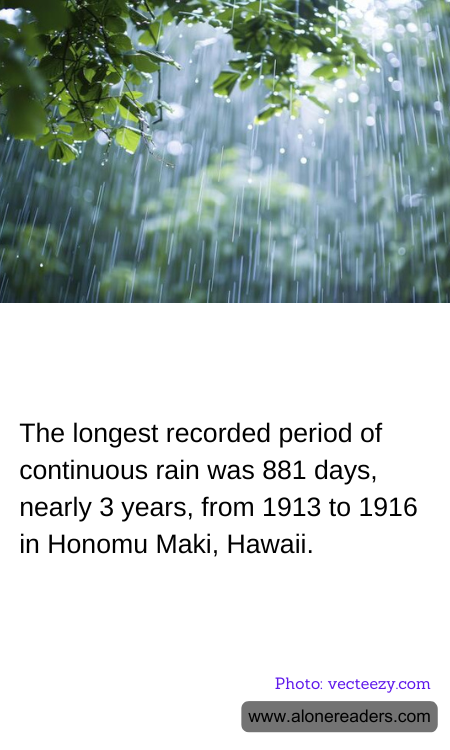
In the heart of Honomu, a small plantation village on the Hamakua Coast of the Big Island of Hawaii, an extraordinary meteorological event took place between 1913 and 1916. This area, known for its lush landscapes and robust rainfall, experienced the longest recorded period of continuous rain, which lasted for an astonishing 881 days. This prolonged period of precipitation is not only a record for Hawaii but also holds a record globally.
Such a long duration of uninterrupted rain can have profound effects on the local ecosystem and community. The constant rain would have contributed to a rise in soil nutrients being washed away, potentially making farming difficult. However, Hawaii’s rich volcanic soil is exceptionally fertile and resilient, helping local flora thrive even under such extreme conditions. Moreover, the consistent moisture would have been ideal for the tropical plants found throughout the area, contributing to the dense rainforests Hawaii is renowned for.
Despite the challenges, the local community and ecosystems adapted to this intense level of precipitation. The event is a striking example of the extraordinary weather patterns that can occur in specific regions around the globe, driven by unique geographical and atmospheric conditions. For meteorologists and weather enthusiasts, the Honomu rain event provides valuable data for understanding long-term weather patterns and their impacts on both natural environments and human activities.
This exceptional meteorological phenomenon underscores the adaptability of ecosystems and human settlements. It also highlights the need for prepared climates resilience and robust agricultural practices in regions prone to extreme weather conditions. The record-breaking rain event in Honomu remains a topic of interest for scientists studying climate patterns and serves as a reminder of the powerful forces of nature.
