More About This Card
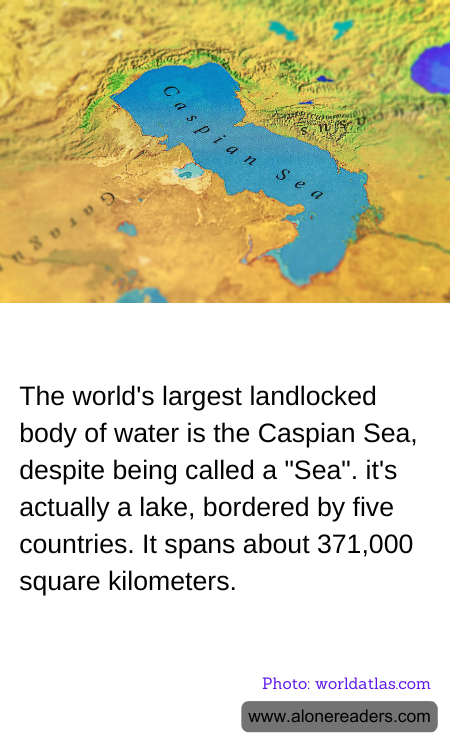
The Caspian Sea, despite its misleading name, is the largest landlocked body of water on Earth, classifying it as a lake rather than a sea. This immense body of water covers an area of approximately 371,000 square kilometers and is bordered by five nations: Russia, Kazakhstan, Turkmenistan, Iran, and Azerbaijan. Each of these countries shares a portion of the Caspian Sea's extensive coastline, which stretches over 7,000 kilometers in total.
Geologically, the Caspian Sea holds a unique position as it lies below sea level, with its surface sitting at about 28 meters below the ocean's level. Its basin, formed millions of years ago, has seen numerous changes due to the shifting and collision of the Eurasian and Iranian plates, which have played a significant role in shaping the current form and depth of the lake. The deepest point in the Caspian Sea reaches over 1,000 meters, making it a significant geological feature on the Eurasian continent.
Ecologically, the Caspian Sea is rich in biodiversity. It is home to numerous species of fish, the most famous of which is the Beluga sturgeon, known for producing the highly prized Beluga caviar. The ecological balance of the Caspian Sea, however, is threatened by pollution, rising salinity, and fluctuating water levels, primarily attributed to oil and gas development activities around the region, alongside the effects of climate change.
Politically and economically, the Caspian Sea holds considerable strategic and economic importance due to its vast oil and natural gas reserves. This has led to complex geopolitical dynamics among the bordering countries, with disputes often arising over territorial waters and the distribution of resources. After years of negotiations, the five littoral states reached a significant agreement in 2018, known as the Convention on the Legal Status of the Caspian Sea, aiming to settle longstanding disputes and enable greater cooperation and resource sharing.
Despite the challenges, the Caspian Sea remains a critical natural resource and an area of significant scientific, ecological, and economic interest. Its preservation and the sustainable management of its natural resources are vital not only for the well-being of the regional environment but also for the economic stability of the bordering nations. As such, international efforts and collaborations continue to play a crucial role in the future health of this unique and important body of water.