More About This Card
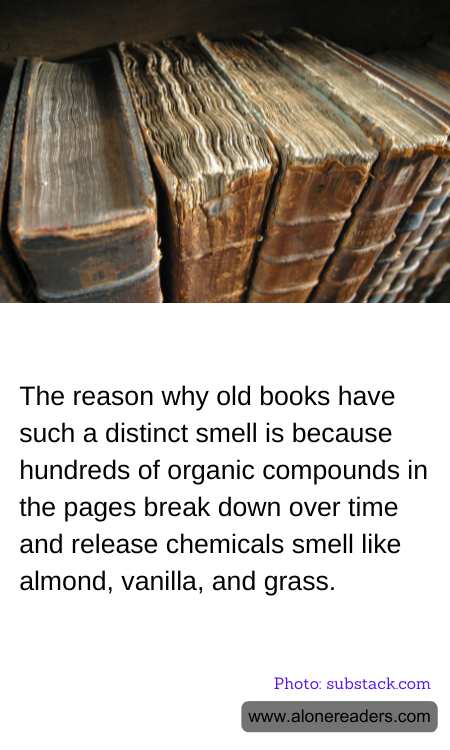
The unique and often nostalgic smell of old books is due largely to the breakdown of chemical compounds within the paper materials over time. As books age, the organic substances within the pages, such as cellulose and lignin found in paper, begin to degrade. This degradation process releases volatile organic compounds (VOCs) into the air, which we then perceive as a distinct aroma.
The specific scents associated with old books can vary. Some people detect a hint of almonds, which can be attributed to benzaldehyde, a byproduct of lignin breakdown. Vanilla notes come from vanillin, another compound that emerges as lignin deteriorates. The smell of grass comes from the release of 2-ethyl hexanol, a byproduct of the breakdown of certain chemicals used during the paper's production. Over time, these and other compounds combine to produce an aroma that is complex and evocative, often associated with nostalgia and the passage of time.
Interestingly, the exact scent can also be influenced by factors such as the type of paper and ink used, the book's binding, adhesives, and even where it has been stored. Books kept in moist or humid environments may develop a mustier smell, which indicates mildew or mold forming on the organic materials, while dry storage can preserve the integrity of the paper and the sharpness of the book's inherent scent.
This characteristic smell of old books is not just appreciated for its nostalgia but also plays a role in the practice of bibliosmell, where the scent is used to assess the age, storage conditions, and sometimes the quality of preservation of historical texts. This olfactory experience adds a layer of depth to the enjoyment of physical books, distinguishing them from modern digital reading devices and highlighting the sensory pleasure of reading physical texts. Even as technology changes how we read, the charm of an old book's smell remains a beloved experience for many bibliophiles around the world.