More About This Card
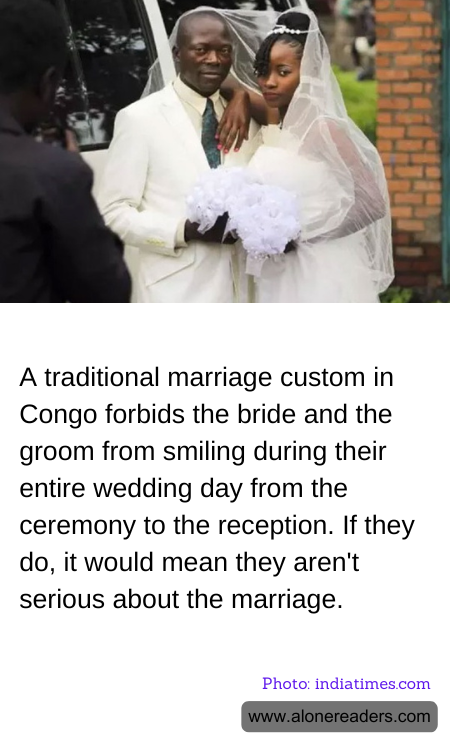
In the Republic of Congo, a traditional marriage custom presents a unique challenge for the bride and groom: they are not permitted to smile throughout their wedding day, from the ceremony to the reception. This custom is deeply rooted in the cultural belief that marriage is a serious undertaking, and the absence of smiles signifies the couple's solemn commitment to their lifelong union. By maintaining a sober demeanor, the couple shows respect for the gravity of the vows they are exchanging and the responsibilities they are about to embrace.
Interestingly, this practice starkly contrasts with wedding customs in many other parts of the world where smiles are abundant, and joy is openly expressed. In Congolese culture, however, the seriousness displayed by not smiling is not interpreted as a lack of joy or love but rather a profound acknowledgment of the significant life change and the challenges that marriage may entail. Family and guests familiar with this custom understand and respect this aspect of the ceremony, often supporting the couple by keeping the atmosphere dignified and formal.
This tradition provides insight into the cultural fabric of Congo, highlighting the diversity in how societies perceive and celebrate the joining of lives. While it might seem odd or stringent from an outsider's perspective, for those within the culture, it is a respected expression of commitment and readiness to face the complexities of married life together. Over time, while some modern couples might opt to adapt or forego this custom, many still adhere to it, preserving this distinct aspect of Congolese cultural heritage.