More About This Card
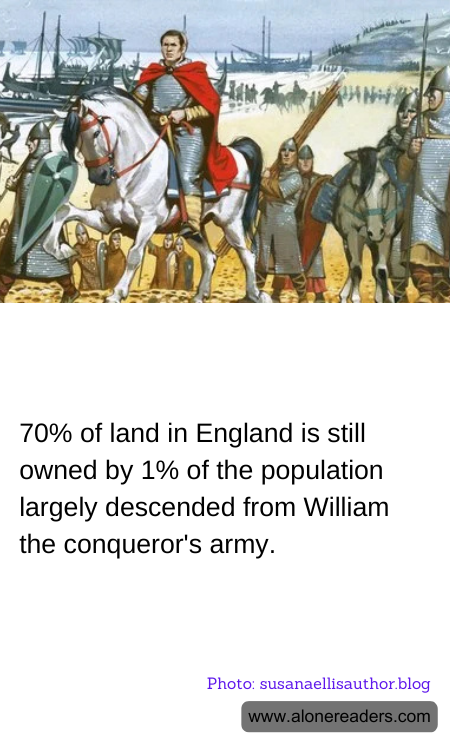
In an era characterized by rapid technological advancement and evolving global markets, the distribution of land ownership in England remains starkly reminiscent of medieval times. Astonishingly, 70% of the land is still owned by just 1% of the population, a statistic that has changed little over the centuries and underscores enduring disparities in wealth and power. This elite group of landholders is largely comprised of descendants of the nobility awarded land during the reign of William the Conqueror. Following the Norman Conquest of 1066, William distributed vast tracts of land to his followers, establishing a feudal system that deeply entrenched aristocratic entitlement to the English landscape.
This historical legacy continues to impact contemporary society in several ways. Firstly, it influences the housing market, as the concentration of land ownership restricts supply and can drive up prices, making homeownership unattainable for many. Secondly, this concentration of land can limit public access to green spaces, which are vital for recreation and mental health, particularly in densely populated areas. Moreover, the control over large areas of land means significant influence over agricultural practices and rural development, which can have broad implications for sustainability and biodiversity.
Efforts to reform land ownership are fraught with political complications and resistance from powerful interests. However, the discussion is gaining traction, especially with increasing public awareness and concern over issues such as housing affordability and environmental sustainability. Policies aimed at redistributing land more equitably range from imposing higher taxes on large estates to encouraging community land ownership. Some advocate for more radical reforms that challenge the historical entitlements of the aristocracy, arguing that a more democratic distribution of land could lead to a fairer society.
The persistence of medieval land ownership patterns in modern England is a powerful reminder of the enduring influence of history on contemporary economic and social systems. As England continues to grapple with issues of equity and sustainability, the question of land reform remains a pivotal part of the national conversation, echoing the complex interplay between past legacies and future possibilities.