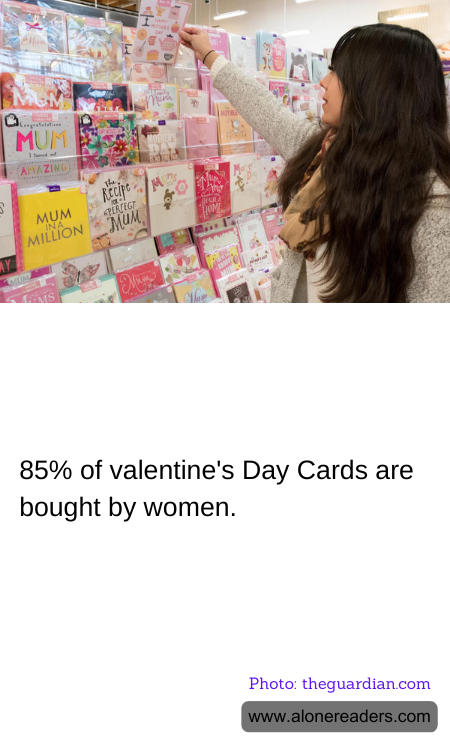
Valentine's Day, celebrated on February 14th each year, is a significant event in many cultures around the world, symbolizing love and affection between intimate companions. One of the most common ways to convey emotions on this day is through the exchange of Valentine’s Day cards. Interestingly, statistics indicate that 85% of these cards are purchased by women.
This trend reveals something profound about societal norms and gender roles. Traditionally, women have often been seen as the nurturers and caretakers of relationships. They are typically socialized to be more expressive and communicative about their feelings. This may partially explain why a substantial majority take the initiative in acquiring Valentine’s cards to express their emotions.
The disparity in card purchasing also sheds light on how men and women differently express love and handle romantic occasions. While women might lean towards tangible displays of affection—such as card-giving, men might express their feelings through other means such as verbal expressions, practical acts of service, or planning a special outing. However, the purchasing stat does not necessarily imply that men are less involved in the celebration; it might also suggest that women enjoy the selection and giving process more, or perhaps they take on the responsibility because of ingrained societal expectations.
Moreover, as gender norms evolve, the dynamics in how Valentine’s Day is celebrated may also change. Increasingly, there's a push towards greater balance in expressing affection among all genders. Men are becoming more engaged in celebrations traditionally dominated by women, and likewise, the idea that emotional expression is solely a woman's role is slowly diminishing.
In conclusion, the fact that 85% of Valentine’s Day cards are bought by women is an intriguing trend that underscores deeper societal themes. It highlights traditional gender roles but also opens a dialogue concerning evolving dynamics in how love and affection are expressed across different genders in modern societies.
