More About This Card
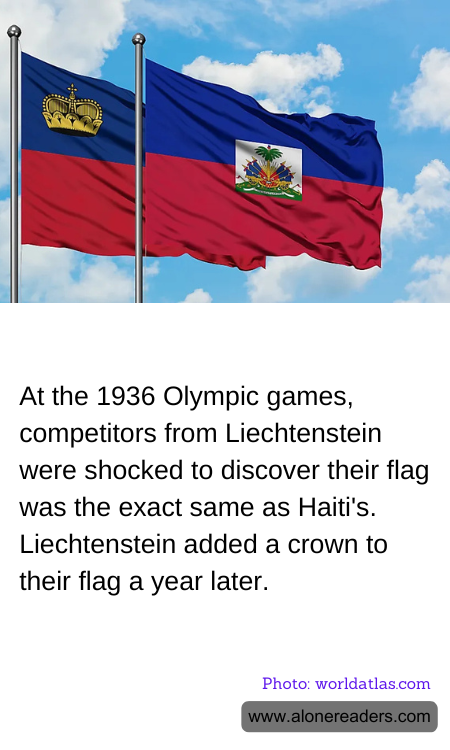
The 1936 Olympic Games in Berlin not only served as a pivotal stage for international sports but also unexpectedly highlighted an intriguing case of vexillology—the study of flags. Athletes from Liechtenstein arrived at the Games, only to experience a surprising revelation during the opening ceremony: their national flag, consisting simply of two horizontal bands of blue and red, was identical to that of Haiti. Unbeknownst to the athletes or the officials from either nation, they had been using the same flag design since the 19th century. This coincidence was particularly striking as there had been minimal contact or any significant relationship between the two countries prior to this encounter.
The discovery at the Berlin Games prompted a swift response from Liechtenstein. By 1937, merely a year after the Olympic incident, Liechtenstein had modified its flag to include a gold crown in the upper hoist corner of the blue band. This addition symbolized the principality's sovereignty and regal heritage, differentiating its flag from Haiti's. The crown also represented Liechtenstein's status as a principality ruled by a prince, adding a layer of national identity and pride to the flag.
This change underscored the importance of unique national symbols in representing a country's identity on the international stage. The episode serves as a fascinating footnote in the annals of Olympic history and highlights the unifying power of such international events, bringing to light shared symbols and histories between nations. It also provides an example of how symbols such as flags can evolve and be adapted in response to unexpected discoveries, reflecting the dynamic nature of national identities.